Autoimmune Disease Specialist Spotlight

How to find the right doctor to treat your specific autoimmune condition and how insurance factors in
Finding a specialist to treat your autoimmune symptoms can be crucial to receiving an accurate diagnosis and developing a comprehensive treatment plan. How can you find the right doctor to treat your autoimmune disease (AD), and how does insurance factor into specialist appointments?
How does someone with a suspected autoimmune disease know which type of doctor to see?
It can be difficult for patients with a suspected autoimmune disease to know which type of doctor to see. A primary care physician or a general practitioner can evaluate symptoms, perform exams and refer a patient to a specialist for further evaluation.
But autoimmune diseases can affect multiple organs and systems, so the type of specialist depends on specific symptoms and the organs affected.
If symptoms suggest an autoimmune disease that primarily affects the joints, such as rheumatoid arthritis, a primary care physician may refer a patient to a rheumatologist. If symptoms suggest an autoimmune disease that primarily affects the skin, such as lupus or scleroderma, a primary care physician may refer the patient to a dermatologist.
It may be necessary to see more than one specialist to get an accurate diagnosis and comprehensive treatment plan. Below are some specialists who treat autoimmune diseases.
Rheumatologists

A rheumatologist treats arthritis and other inflammatory diseases that can affect the muscles, bones, joints, ligaments, and tendons. In “systemic autoimmune diseases,” a person’s immune system attacks their body and can cause deformities. Autoimmune conditions include: rheumatoid arthritis, ankylosing spondylitis, antiphospholipid syndrome, juvenile idiopathic arthritis, lupus, polymyositis, psoriatic arthritis, Raynaud’s syndrome, Scleroderma, Sjӧgren’s syndrome, Still’s disease, and vasculitis.
A rheumatologist completes three to four years of medical or osteopathic education followed by three years of residency training in either internal medicine or pediatrics. In order to focus on musculoskeletal and autoimmune conditions, a rheumatologist must commit to specialty training for another two to three years. Rheumatologists must pass an exam to be board-certified, and many remain committed to furthering their education by participating in a voluntary program coordinated by the American Board of Medical Specialties called Maintenance of Certification.
Those with a genetic history of autoimmune or rheumatic disease or symptoms, including inexplicable, recurring, or worsening joint pain and swelling, should see a rheumatologist. An early diagnosis can often prevent permanent damage to joints and organs.
Dermatologists
Dermatologists diagnose and treat skin, hair, and nail diseases. Autoimmune conditions of the skin include alopecia areata, Behçet’s disease, dermatomyositis, linear IgA disease, pemphigus, pemphigoid, psoriasis, scleroderma, and vitiligo.
Dermatologists must earn a bachelor’s degree and complete four years of medical school, a year-long internship in medicine, and three years of a residency in which they accumulate 12,000 to 16,000 hours of treating patients. A dermatologist becomes board certified after passing an exam administered by the American Board of Dermatology, the American Osteopathic Board of Dermatology, and the Royal College of Physicians and Surgeons of Canada.
According to the clinical program in dermatology at the University of Pennsylvania, more than 80 types of known autoimmune disorders affect organs and tissues. In an autoimmune disorder of the skin, the body’s immune system mistakenly destroys healthy body tissue. Symptoms include rashes and hardening or tightening of the skin.
Gastroenterologists

Gastroenterologists treat diseases of the gastrointestinal tract and liver. Those include autoimmune conditions such as autoimmune gastritis, autoimmune gastrointestinal dysmotility, autoimmune hepatitis, autoimmune pancreatitis, Celiac disease, Crohn’s disease, primary biliary cholangitis/cirrhosis, and Ulcerative Colitis.
Various symptoms may indicate an autoimmune condition affecting the digestive system, including abdominal pain, diarrhea, constipation, weight loss, and fatigue. To diagnose a condition, a gastroenterologist may perform a variety of diagnostic procedures, such as endoscopies, which use a small camera to see inside the digestive tract. A gastroenterologist may also perform a stool analysis, blood tests, or other laboratory tests.
Treatment may include immunosuppressive medications to control symptoms and prevent further damage to the digestive system. Gastroenterologists may also recommend dietary changes, such as a gluten-free diet for Celiac disease, to help manage the condition.
Gastroenterologists must complete four years of medical school and a three-year internal medicine residency to become eligible to further specialize in gastroenterology through a two-to-three year fellowship. Groups that oversee advanced training include the American Board of Internal Medicine, the American College of Gastroenterology, the American Gastroenterological Association, and the American Society for Gastrointestinal Endoscopy.
Immunologists
Immunologists, also known as allergists, specialize in studying the immune system, including how it works, fights off infections and diseases, and how it can go wrong in autoimmune conditions. Immunologists can treat and manage allergies, asthma, and immunologic disorders, including primary immunodeficiency disorders.
When the immune system produces antibodies against certain substances or foods that cause allergies, symptoms may include nasal congestion, watery eyes, shortness of breath, and low blood pressure.
To become an immunologist, one must complete medical school, three years of internal medicine or pediatrics training, and then at least two years of study in an allergy/immunology training program. Immunologists must also pass the American Board of Internal Medicine (ABIM) or the American Board of Pediatrics (ABP) exam.
Rheumatologists and immunologists often work together on autoimmune conditions because of their different areas of expertise. Rheumatologists are specialists in the diagnosis and treatment of musculoskeletal and autoimmune conditions, while immunologists may study the genetic factors that contribute to certain autoimmune conditions, as well as the environmental triggers that can cause the immune system to attack healthy cells.
Neurologists

Neurologists specialize in nervous system disorders, including the brain, spinal cord, nerves, and muscles. Neurologists focus on the diagnosis and treatment of neurological conditions such as Alzheimer’s disease, epilepsy, Parkinson’s disease, Multiple Sclerosis (MS), migraine headaches, and stroke.
Autoimmunity is the cause of a range of neurologic disorders. Some autoimmune conditions, such as MS, can significantly impact the nervous system. For example, a neurologist may also be consulted in cases of lupus to evaluate and treat neurological symptoms such as seizures, headaches, or nerve damage. Autoimmune conditions treated by neurologists include acute disseminated encephalomyelitis, autoimmune encephalitis, chronic inflammatory demyelinating polyneuropathy, Guillain-Barré syndrome, Multiple Sclerosis, Myasthenia Gravis, and neuromyelitis optica.
Standard neurologic tests used to complete evaluations include computed tomography (CT) or computer-assisted tomography (CAT) scans; magnetic resonance imaging (MRI); electroencephalography (EEG); nerve conduction studies and electromyography (NCS/EMG) and lumbar puncture (LP) for cerebral spinal fluid analysis.
To become a neurologist in the United States, one must receive a pre-medical education at a college or university, attend four years of medical school, complete a one-year internship in internal medicine or medicine/surgery, and have at least three years of specialty training in an accredited neurology residency program.
Endocrinologists
An endocrinologist specializes in disorders of the endocrine system, which includes the glands that produce hormones. Hormones are chemical messengers that play a key role in regulating many of the body’s functions, such as metabolism, growth and development, and the body’s response to stress.
Endocrinologists have expertise in diagnosing and treating a wide range of endocrine disorders, including diabetes, thyroid disease, osteoporosis, and disorders of the pituitary and adrenal glands. They also have expertise in diagnosing and managing certain autoimmune diseases that can affect the endocrine system, such as autoimmune Addison’s disease, autoimmune hypophysitis, Graves disease, Hashimoto’s thyroiditis, testicular autoimmunity, Type 1 Diabetes, and Schmidt (polyendocrine) syndrome.
Some disorders involve the endocrine system, even though they do not originate there. An endocrinologist works closely with other specialists, such as a rheumatologist, neurologist, or dermatologist, to provide comprehensive care.
Understanding processes that may be disrupted in endocrine disorders requires knowledge of pathophysiology and biochemistry. After medical school and internal medicine residency training, a two or three-year fellowship in the field of endocrinology must be undertaken for a physician to become an endocrinologist. An endocrinologist must also be board-certified.
Which Autoimmune Diseases Are Typically Covered By Insurance?
Insurance coverage for autoimmune diseases can vary depending on the specific type of disease, the insurance plan, the type of treatment required, and the state someone lives in. In the United States, most insurance plans, including those offered by employers, as well as Medicaid and Medicare, cover the diagnosis and treatment of autoimmune diseases.
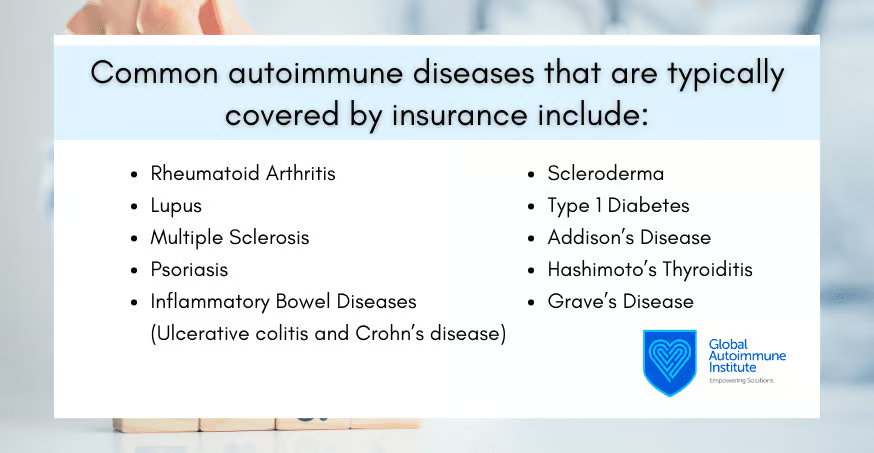
However, coverage may vary. Some insurance plans may require pre-authorization or may have limits on the number of visits to a specialist or the number of medications that are covered. Immunological diseases can also be challenging to navigate because there may not necessarily be a finite treatment that guarantees patients will recover.
Andrea Zlatkus, executive director at the National Organization of Rheumatology Management, notes a $7,500 out-of-pocket fee for biologics related to autoimmune diseases, which may not always be fully covered.
“We always tell patients to look at possibly having Medicare and a secondary insurer because you won’t have to pay the $7,500 out-of-pocket fee,” she says. Even with a secondary insurer, many chronic immune patients may still have to pay up to $2,000 a year, which can become extremely expensive over time.
Zlatkus also says the more information you can give ahead of time can be useful, and she notes it’s often easier to help someone with no insurance than someone who is underinsured.
Check with your insurance provider to understand your specific plan and also be aware of the out-of-pocket expenses, deductibles, and coinsurance. Additionally, it’s a good idea to be familiar with the terms and conditions of the insurance policy, including exclusions and restrictions.

Sources
- Article Sources
What is a rheumatologist? – American College of Rheumatology. Retrieved January 31, 2023, from https://www.rheumatology.org/I-Am-A/Patient-Caregiver/Health-Care-Team/What-is-a-Rheumatologist
Dee, J. E. (2021, May 11). 5 reasons why a patient should see a rheumatologist. Yale School of Medicine. Retrieved January 31, 2023, from https://medicine.yale.edu/news-article/5-reasons-to-see-a-rheumatologist/
Autoimmune disease. Penn Dermatology. (2018, May 9). Retrieved January 31, 2023, from https://dermatology.upenn.edu/clinical-programs/autoimmune-disease/
What is a dermatologist? American Academy of Dermatology. (n.d.). Retrieved January 31, 2023, from https://www.aad.org/public/fad/what-is-a-derm
What is a gastroenterologist? American College of Gastroenterology. (2019, September 9). Retrieved January 31, 2023, from https://gi.org/patients/gi-health-and-disease/what-is-a-gastroenterologist/
Autoimmune diseases in gastroenterology. Current Pharmaceutical Design. Retrieved January 31, 2023, from https://pubmed.ncbi.nlm.nih.gov/22612745/
About allergists / immunologists. American Academy of Allergy Asthma and Immunology. Retrieved January 31, 2023, from https://www.aaaai.org/About/About-Allergists-Immunologists
Why see a specialist in immunology, rheumatology, and allergy? Retrieved January 31, 2023, from https://uihc.org/health-topics/why-see-specialist-immunology-rheumatology-and-allergy
Neurology at Highland Hospital. What is a Neurologist? Highland Hospital – University of Rochester Medical Center. Retrieved January 31, 2023, from https://www.urmc.rochester.edu/highland/departments-centers/neurology/what-is-a-neurologist.aspx
What is a neurologist? AAN. Retrieved January 31, 2023, from https://www.aan.com/tools-resources/what-is-a-neurologist
Abbatemarco, J. R., Rodenbeck, S. J., Day, G. S., Titulaer, M. J., Yeshokumar, A. K., & Clardy, S. L. (2021, September 1). Autoimmune Neurology. Neurology Neuroimmunology & Neuroinflammation. Retrieved January 31, 2023, from https://nn.neurology.org/content/8/5/e1033
What is an endocrinologist? American Association of Clinical Endocrinology. Retrieved January 31, 2023, from https://www.aace.com/all-about-endocrinology/what-endocrinologist