Body Regions Commonly Affected by Autoimmunity
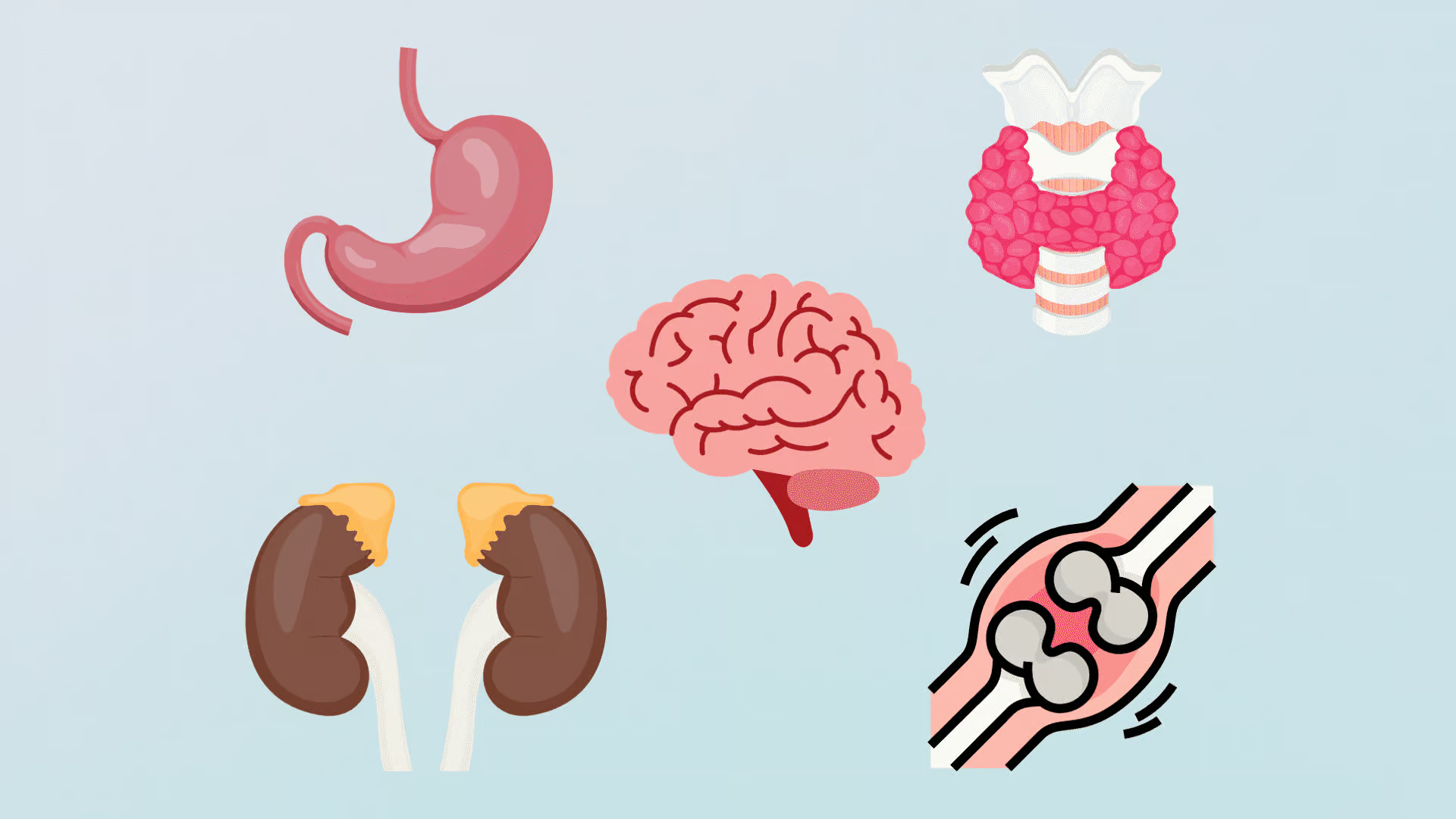
Autoimmune diseases can affect almost any part of your body and can be classified into systemic or organ-specific diseases based on their location. “The key thing is that you can actually test for an autoimmune reaction by looking at serologies in the blood,” said Gabriella Safdieh, an integrative medicine physician. “There are various serologies that are consistent with different forms of autoimmune diseases.” Serology is the scientific study of serum (blood component) and other body fluids. The term usually refers to the diagnostic identification of antibodies in the serum.
In systemic autoimmune diseases, such as rheumatoid arthritis, autoantigens are found in cells throughout the body, resulting in a variety of damaged organs and tissues. Organ-specific autoimmune diseases affect particular targets in the body, such as the thyroid gland in those with Graves’ Disease. “When someone has one autoimmune disease, they are at increased risk for development of another autoimmune disease,” Safdieh said. A single patient may experience various types of autoimmune diseases at the same time as a result of autoantibodies that attack corresponding autoantigens.
Some body regions commonly affected by autoimmune diseases are outlined below:

Stomach
Related antibodies: anti-parietal cell antibodies (APCA)
Autoimmune gastritis (AIG) is more common in females than in males and is generally asymptomatic until the disease has advanced (1). As a result, it is frequently underdiagnosed. AIG is more prevalent in patients affected by other autoimmune diseases, especially autoimmune thyroid diseases (AITD) and Type 1 diabetes. Parietal cells make and release a substance that the body needs to absorb vitamin B12. But antibodies were found to inhibit the activity of H+, K+-adenosine triphosphatase (2). Patients with chronic iron deficiency should be evaluated for the presence of autoimmune gastritis (3).
Thyroid
Related antibodies: anti-thyroid peroxidase (TPO)
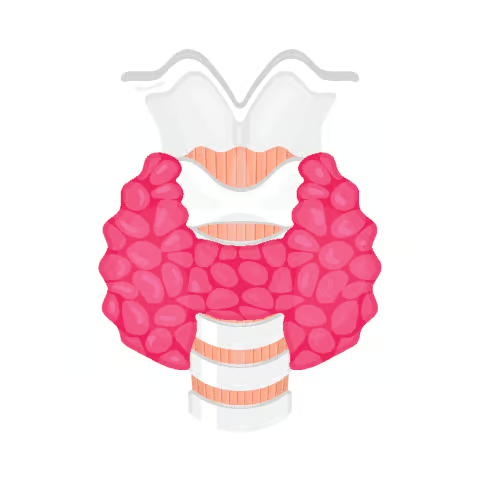
Autoimmune thyroid diseases (AITD) are the most prevalent organ-specific autoimmune diseases, affecting 2 to 5% of the population (4). Frequently, AITD are accompanied by the presence of antithyroid antibodies, including anti-thyroid peroxidase (TPO), which are found in 90–95% of AITD patients (5). TPO is key for adequate function of the thyroid gland as it helps produce thyroid hormones which regulate growth, brain development, and metabolism (6).
Autoimmune thyroid diseases include Hashimoto’s Thyroiditis and Graves’ Disease, among others.
Hashimoto’s thyroiditis is the most common cause of hypothyroidism in developed countries (7). The pathology of the disease involves the formation of antithyroid antibodies that attack the thyroid tissue. Under attack, the thyroid is unable to make enough thyroid hormones (hypothyroidism). Over time, the thyroid enlarges.
Graves’ disease (GD) is an autoimmune disease that primarily affects the thyroid gland. In patients suffering from Graves, autoantibodies to the thyroid-stimulating hormone receptor (TSHR) induce excessive thyroid hormone secretion (8). Body functions accelerate as a result.

Brain
Related antibodies: brain-reactive antibodies, including synapsin antigens
Approximately 2–3% of the general population has brain-reactive antibodies which penetrate brain tissue and can cause damage to the brain (9).
Autoimmune diseases that affect the brain include Vasculitis and Multiple Sclerosis:
Vasculitis: Inflammation of the blood vessel wall (10). In dire cases, such inflammation can result in aneurysms or hemorrhage. There is no known cause.
Multiple Sclerosis: A chronic disease affecting the brain and spinal cord, which comprise the central nervous system. MS often leads to severe physical or cognitive incapacitation (11).
Adrenals
Related antibodies: 21-hydroxylase antigens
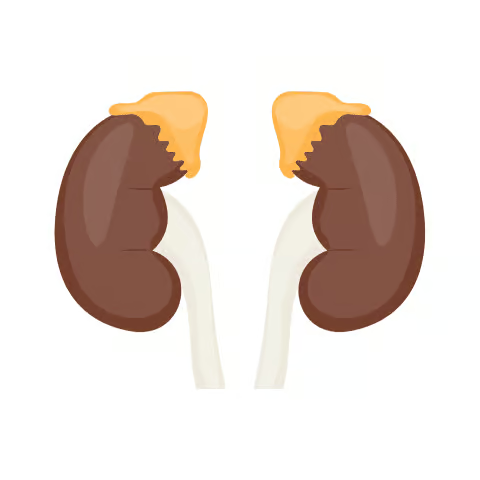
In some autoimmune diseases, the immune system attacks adrenal glands, which leads to primary adrenal insufficiency, or autoimmune Addison’s disease (AAD). Autoimmune adrenalitis, or AAD, is rare, but it is the most prevalent cause of primary adrenal insufficiency in the developed world (12). The cause is complex and not completely understood.
Adrenal glands are located at the top of the kidneys and produce a variety of hormones including:
– Cortisol: A stress hormone involved in the response to physical and/or emotional stress. Cortisol is related to blood pressure, anti-inflammatory action, and the metabolism of protein, carbohydrates, and adipose (13).
– Aldosterone: A steroid hormone that plays an important role in sodium and fluid reabsorption, as well as regulating blood pressure and volume (14).
Autoimmune Addison’s disease occurs when the immune system attacks 21-hydroxylase, which is important for hormone production in the outer layers of the adrenal glands, known as the adrenal cortex. A shortage of adrenal hormones (adrenal insufficiency) results in hypoglycemia, hyponatremia, hypotension, muscle cramps, skin hyperpigmentation, and other features of Autoimmune Addison’s disease.
Gut
Related antibodies: tropomyosin antigens
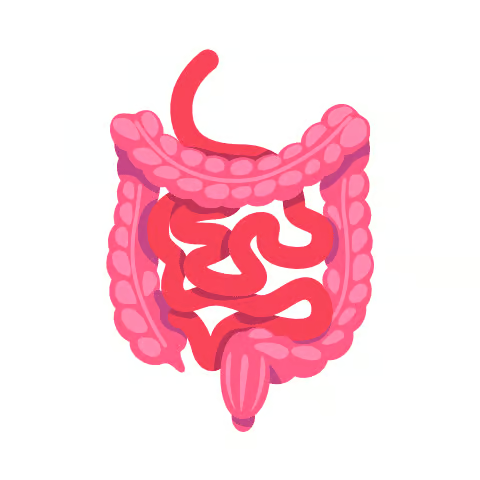
One autoimmune disease which occurs in the gut is Ulcerative Colitis (UC). UC is a form of chronic inflammatory bowel disease (IBD) that impacts mucosa in the colon. In patients with UC, antibodies target the protein tropomyosin (15). UC is not caused by any specific pathogen. Rather, a combination of genetics, environmental factors, and altered immune responses to dietary macromolecules, colonic bacteria, and cellular proteins are related.
Joints
Related antibodies: arthritic peptide antigens, including rheumatoid factor (RF) and anti-citrullinated protein antibodies (ACPA)
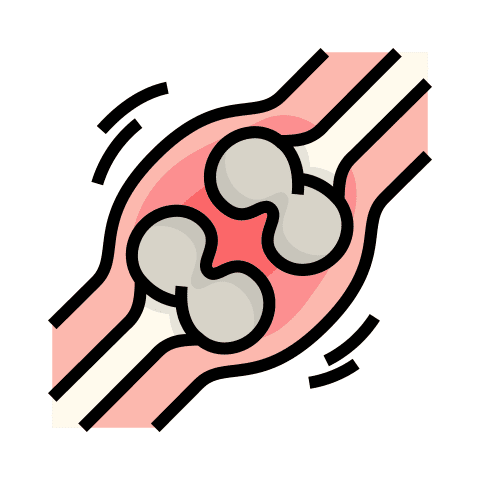
Rheumatoid Arthritis (RA) principally affects synovial joints, particularly the hands, feet, and knees. Around 0.5 to 1% of the world population is affected (16). Symptoms include pain, joint swelling, and stiffness, in addition to cartilage and bone degradation. Blood vessels, kidneys, the heart, lungs, and the liver can also be affected (16). The exact cause of RA is unknown, although researchers believe it’s caused by a combination of genetics, hormones, and environmental factors. When antibodies attack the tissues lining joints, synovial cells divide and contribute to inflammation, which can ultimately contribute to cartilage and bone destruction.
RA patients can be divided into two subsets:
Autoantibody positive: 60%-80% of people with RA are seropositive, meaning blood possesses antibodies that can attack your body and inflame your joints. Several antibody systems have been identified in RA, including rheumatoid factor (RF) and anti-citrullinated protein antibodies (ACPA).
Autoantibody negative: Seronegative RA means autoantibodies are not present. It can be diagnosed with a particular set of symptoms.

Sources
- Article Sources
Bizzaro, Nicola, et al. 2018. “Autoimmunity and Gastric Cancer” International Journal of Molecular Sciences 19, no. 2: 377. https://doi.org/10.3390/ijms19020377
Rusak E, Chobot A, Krzywicka A, Wenzlau J. 2016. Anti-parietal cell antibodies – diagnostic significance. Adv Med Sci. 2016 Sep;61(2):175-179. https://pubmed.ncbi.nlm.nih.gov/26918709/
Kulnigg-Dabsch S. Autoimmune gastritis. Wien Med Wochenschr. 2016 Oct;166(13-14):424-430. https://www.ncbi.nlm.nih.gov/pmc/articles/PMC5065578/. Epub 2016 Sep 26.
Juan-Manuel Anaya, et al. 2013. Autoimmunity: From Bench to Bedside. Bogota (Colombia): El Rosario University Press; 2013 Jul 18. https://www.ncbi.nlm.nih.gov/books/NBK459466/
Rabiee A, Salman M, et al. Antithyroid Peroxidase Antibodies and Histopathological Outcomes in Egyptian Patients Subjected to Total Thyroidectomy for Non-Malignant Nodular Goiter. Int J Gen Med. 2021 Jun 10;14:2421-2425. https://www.ncbi.nlm.nih.gov/pmc/articles/PMC8203296/
Mullur R, Liu YY, Brent GA. Thyroid hormone regulation of metabolism. Physiol Rev. 2014 Apr;94(2):355-82. https://www.ncbi.nlm.nih.gov/pmc/articles/PMC4044302/
StatPearls, Treasure Island (FL): StatPearls Publishing; 2022 Jan. https://www.ncbi.nlm.nih.gov/books/NBK459262/
Davies TF, Andersen S, et al. Graves’ disease. Nat Rev Dis Primers. 2020 Jul 2;6(1):52. https://pubmed.ncbi.nlm.nih.gov/32616746/
Diamond B, Honig G, Mader S, Brimberg L, Volpe BT. Brain-reactive antibodies and disease. Annu Rev Immunol. 2013;31:345-85. https://www.ncbi.nlm.nih.gov/pmc/articles/PMC4401150/
Vasculitis and the Nervous System Fact Sheet (no date) National Institute of Neurological Disorders and Stroke. U.S. Department of Health and Human Services. Available at: https://www.ninds.nih.gov/vasculitis-and-nervous-system-fact-sheet.
Ghasemi N, Razavi S, Nikzad E. Multiple Sclerosis: Pathogenesis, Symptoms, Diagnoses and Cell-Based Therapy. Cell J. 2017 Apr-Jun;19(1):1-10. https://www.ncbi.nlm.nih.gov/pmc/articles/PMC5241505/
Brandão Neto RA, de Carvalho JF. Diagnosis and classification of Addison’s disease (autoimmune adrenalitis). Autoimmun Rev. 2014 Apr-May;13(4-5):408-11. https://pubmed.ncbi.nlm.nih.gov/24424183/
Cortisol – an overview | ScienceDirect Topics. https://www.sciencedirect.com/topics/biochemistry-genetics-and-molecular-biology/cortisol.
Aldosterone, Comprehensive Biophysics, 2012 https://www.sciencedirect.com/topics/biochemistry-genetics-and-molecular-biology/aldosterone
Biancone L, Monteleone G, Marasco R, Pallone F. Autoimmunity to tropomyosin isoforms in ulcerative colitis (UC) patients and unaffected relatives. Clin Exp Immunol. 1998 Aug;113(2):198-205. https://www.ncbi.nlm.nih.gov/pmc/articles/PMC1905040/
Myrthe A.M. van Delft, Tom W.J. Huizinga, An overview of autoantibodies in rheumatoid arthritis, Journal of Autoimmunity, Volume 110, 2020, 102392,ISSN 0896-8411, https://www.sciencedirect.com/science/article/pii/S0896841119308194