The Role of Epigenetics in Autoimmune Disease
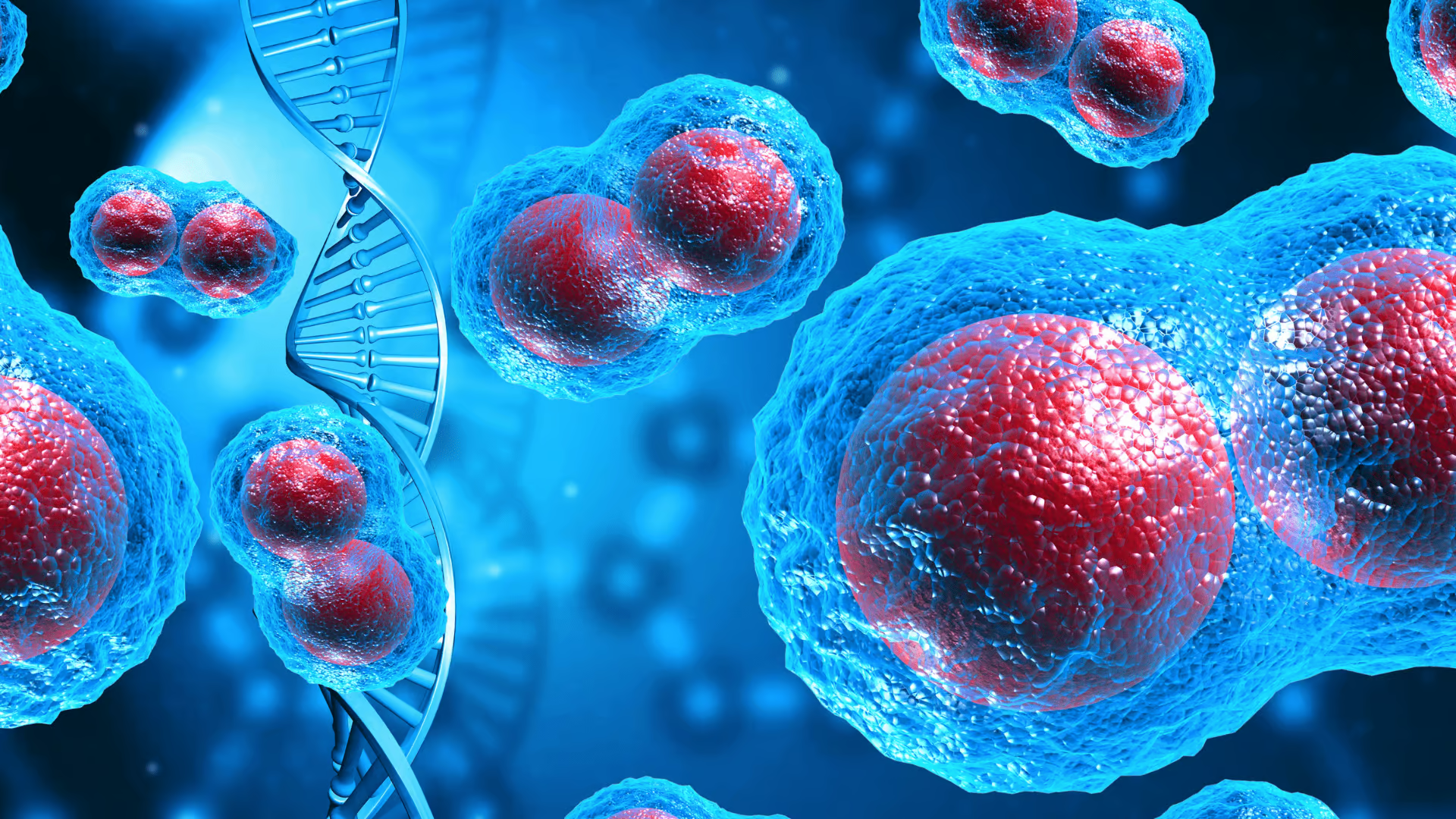
DNA is made of a string of molecules designated by the letters, A’s, G’s, T’s, and C’s. The order of these molecules determines the sequence of your genes, the proteins they encode, and the functions these proteins carry out. But ultimately, it’s not just your DNA sequence that determines what goes on in your cells. Enter epigenetics.
What is Epigenetics?
While the genes in your body govern what proteins are made, the gene sequence itself doesn’t determine when the proteins are made. Epigenetics, or modifications to the DNA that don’t directly alter its sequences, governs when specific genes are turned on or off.
Christopher Lessard, a Professor at Oklahoma Medical Research Foundation and Adjunct Associate Professor at the University of Oklahoma Health Sciences Center, compares epigenetics to the brakes and accelerator of a car.
“It makes it so that things don’t spontaneously go when they’re not supposed to and they stay stopped if they’re supposed to.”
“Even though the DNA is the same, the layers of epigenetic marks make gene expression happen differently, and that’s what’s changing the functionality of cells,” says Montserrat Anguera, Associate Professor at the University of Pennsylvania School of Veterinary Medicine.
What Types of Epigenetic Modifications Are There?
DNA methylation is a type of epigenetic mark that is added to specific sequences within the DNA sequence (1).
Methylation results in changes in gene expression, but whether it activates or inhibits a gene depends on where methylation occurs and the specific gene involved.
Methylation is a natural process carried out by specific enzymes in the cell beginning during embryonic development.
In the cell, DNA is wound around spool-like proteins called histones.
These structures then assemble into a highly organized fiber called chromatin.
Because DNA strands are so long, histones protect them from being tangled and damaged.
Histones also have a role in regulating whether a gene is turned on or off.
A plethora of non-coding RNA, or RNAs that do not code for proteins, regulate expression of genes.
“There are a lot more non-coding RNAs than there are protein-coding RNAs,” says Lessard.
These non-coding RNAs regulate whether proteins are made or not and modulate chromatin remodeling, DNA methylation, or histone modification (2).
How do Environmental Factors and Lifestyle Impact Epigenetic Modifications?
In 2010, researchers from Bellvitge Biomedical Research Institute (IDIBELL) published a paper that describes lupus cases in identical twins. In most cases where one twin developed lupus, the other twin did not (3).
When they looked at pairs of twins where only one twin developed lupus, they found widespread changes in DNA methylation patterns in a number of genes.
Because the twins are genetically identical, a possible culprit to the discordance is the impact of environmental and lifestyle factors on the epigenome.
Many studies have found that the epigenome can change from exposure to:
- Air pollution
- Smoking
- Radiation
- Metals such as arsenic, lead, and mercury
- Specific nutrients from food
- Stress
How do Epigenetic Modifications Impact Autoimmunity?
Because epigenetic modifications impact gene expression, modifications affecting the expression of immune-related genes, such as those involved in immune regulation or self-tolerance, can contribute to the susceptibility or progression of autoimmunity.
Scientists have found connections between epigenetic marks and a variety of autoimmune diseases. The contributions of epigenetics in autoimmune disease are complex and can involve global changes in epigenetic marks (ex: decrease in epigenetic marks throughout the genome in a certain cell type), epigenetic changes at specific sites on DNA, or a combination of both.
Epigenome changes in autoimmune diseases
Several studies have found abnormal non-coding RNA expression in T cells in lupus (4).
Interferon-related genes are also widely demethylated in neutrophils, a type of white blood cell (5).
Abnormal demethylation patterns in CD4+ T cells may also explain why T cells are over-reactive in systemic lupus erythematosus (6).
Global hypomethylation can be seen in the T cells in the context of rheumatoid arthritis (7).
Overexpression of a long non-coding RNA normally found to influence the expression of interferon and the adaptive immune response can be seen in Sjögren’s disease (8).
Its overexpression may lead to dysregulated T cell inflammatory pathways.
Scientists have found abnormal DNA methylation globally and in specific genes in CD4+ T cells in systemic sclerosis (4).
Aside from links of epigenetic alterations to specific autoimmune diseases, epigenetics may explain why autoimmune diseases affect women at far greater rates than in men. Normally, epigenetic modifications silence the genes on one of the two X chromosomes in women. A long non-coding RNA, called Xist, normally coats the inactive X chromosome. The X chromosome has a high density of immune-related genes, which is why improper inactivation impacts rates of autoimmunity. “If you look at T cells and B cells from patients with autoimmune disease, in lupus specifically, we see that Xist is not localized properly around the inactive X chromosome,” says Anguera, who studies the contribution of X-chromosome inactivation in female-biased autoimmunity.
Epigenetic Biomarkers for the Detection of Autoimmune Disease
As several studies have found differences in the epigenetic landscape in autoimmune disease, is it possible for altered epigenetic marks to be used as biomarkers for disease? Currently, there aren’t any clinical tests targeted towards the epigenome, says Anguera. Lessard adds that “gene involvement is more likely to be used sooner for diagnosis than epigenetic changes.”
But in the future, it might be possible that epigenetics can be used as biomarkers clinically. As an example, methylation of a region of DNA called the IFI44L promoter is being explored as a biomarker for SLE diagnosis (9). In an article discussing epigenetic markers in various autoimmune diseases, Haijing Wu and colleagues from Hunan Key Laboratory of Medical Epigenomics wrote “genetic biomarkers might predict the future manifestations, while epigenetic and protein biomarkers might reflect disease activity and drug response” (4).
In other words, our DNA can give us indications that an autoimmune disease might develop, while epigenetic and protein biomarkers reveal what’s actively going on in our bodies.
The Future of Epigenetics-Based Therapies to Treat Autoimmune Disease
Currently, epigenetics based therapies are at the beginning stages of development. “There are a number of epigenetic targeted inhibitors that have been developed that have efficacy in cancer. There’s some work suggesting that targeting these same complexes might be effective in the context of lupus,” says Anguera.
An example of a cancer therapeutic being repurposed for autoimmune diseases is IOX1, which is being studied as a cancer therapy. Preclinical studies have found that IOX1, which impacts DNA methylation, can be used to treat inflammation of the eye (10). Anguera also points out that other DNA methylation inhibitors could be effective to treat lupus.
However, “it’s a bit more challenging in autoimmunity,” says Lessard. “In situations of cancer, you’re targeting some sort of lesion where drug delivery is a little bit more obvious.” For autoimmunity however, these drugs could cause widespread immune suppression, which could interfere with our ability to fend off infections. “We have to balance the unnecessary level of infection with the efficaciousness of the drug,” says Lessard.
For the field as a whole, epigenetics has benefited from recent technological developments like CRISPR, which gives scientists the ability to easily edit cells and organoids derived from pluripotent stem cells, says Lessard. “I think those things coupled together are really going to enable us to figure out what’s the target genes, and then we can really start thinking about how the epigenetic changes are really impacting gene expression in a cell type and context-specific manner,” says Lessard.

About the Author

A microbiologist turned freelance science writer who works with life science companies, nonprofits, and academic institutions on anything from news stories, explainer articles, and content marketing. She shares the wonderful world of microbes on her blog The Microbial Menagerie.

Sources
- Article Sources
Moore, L.D. et al. (2012). DNA Methylation and Its Basic Function. Neuropsychopharmacology, 38(1): 23-238.
Gao, N. et al. (2020). Long Non-Coding RNAs: The Regulatory Mechanisms, Research Strategies, and Future Directions in Cancers. Frontiers in Oncology, 10.
Javierre, B.M. et al. (2009). Changes in the pattern of DNA methylation associate with twin discordance in systemic lupus erythematosus. Genome Research, 20(2): 170-179.
Wu, H. et al. (2018). Epigenetics as biomarkers in autoimmune diseases. Clinical Immunology, 196: 34-39.
Coit, P. et al. (2015). Epigenome profiling reveals significant DNA demethylation of interferon signature genes in lupus neutrophils. Journal of Autoimmunity, 58: 59-66.
Jeffries, M. et al. (2011). Genome-wide DNA methylation patterns in CD4+ T cells from patients with systemic lupus erythematosus. Epigenetics, 6(5): 593-501.
Richardson, B. et al. (1990). Evidence for impaired t cell dna methylation in systemic lupus erythematosus and rheumatoid arthritis. Arthritis & Rheumatism, 33(11): 1665-1673.
Joachims, M.L. et al. (2022). Dysregulated long non-coding RNA in Sjögren’s disease impacts both interferon and adaptive immune responses. RMD Open, 8(2): e002672.
Zhao, M. et al. (2016). IFI44L promoter methylation as a blood biomarker for systemic lupus erythematosus. Annals of the Rheumatic Diseases, 75(11): 1998–2006.
Hu, X. et al. (2022). Epigenetic drug screen identified IOX1 as an inhibitor of Th17-mediated inflammation through targeting TET2. eBioMedicine, 86: 104333.