Biologics for Autoimmune Disease: What You Should Know
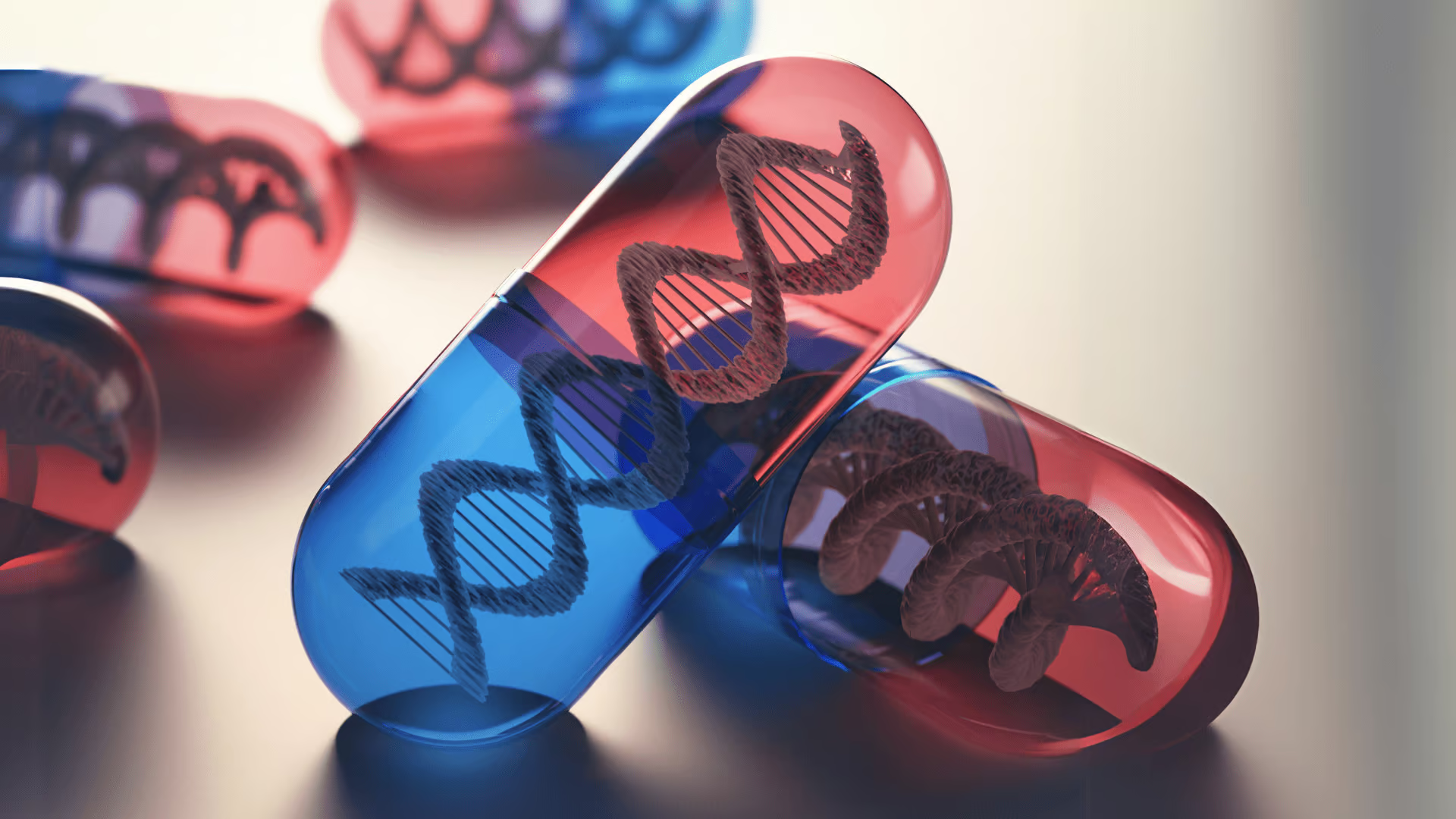
Many of the drugs we take are known as small molecule drugs. These drugs, such as over-the-counter pain relievers, antibiotics, or other prescriptions, are chemically synthesized. They’re convenient and oftentimes exist as pills stored at room temperature.
Biologics, in contrast, are drugs that are produced from biological sources like cells. As a newer class of drugs, biologics have many benefits over small molecule drugs but also bring many logistical changes. In this article, we describe how biologics are used to treat autoimmune diseases and discuss the practical details of taking a biologic.
What are Biologics?
Biologics used to treat autoimmune disease come in the form of antibodies, proteins designed to bind specific components (ex: molecules, proteins) in our body to modulate their activity.
“In the case of conditions like rheumatoid arthritis or psoriatic arthritis, a biologic can be used as an antibody against certain molecules that cause inflammation, thereby reducing the inflammation that causes symptoms in these diseases,” says Jason E. Liebowitz, Rheumatologist and Assistant Professor of Medicine at Columbia University Irving Medical Center.
Beyond this, biologics can have other mechanisms of action. For example, other biologics bind components on the surface of a specific cell type to inhibit them.
How do Biologics Work to Treat Autoimmune Disease?
The first biologic drug used to treat autoimmune disease was approved by the FDA in 1998 (1). This drug, infliximab (Remicade), was initially approved to treat Crohn’s disease but has since then been approved to treat other autoimmune conditions like rheumatoid arthritis, ankylosing spondylitis, and plaque psoriasis (2). Since then, the number of biologic drugs used to treat autoimmune diseases has continued to grow. Ashish S. Patel, Physician-in-Chief; Division Chief, Gastroenterology at Phoenix Children’s, adds, “now what you’re starting to see is [biologics] expand into more antibodies that target different pathways of inflammation.” Liebowitz says, “there are many new agents coming onto the market all the time, particularly for conditions like psoriasis and psoriatic arthritis.”
Many biologics used to treat autoimmune diseases exist in the form of monoclonal antibodies that bind to components of the immune system to prevent them from being self-reactive. These can include:
- TNFɑ inhibitors are antibodies that bind TNFɑ (tumor necrosis factor). Those with autoimmune diseases can have excessive TNFɑ which can lead to inflammation. When inhibitors bind to TNFɑ, they block their activity (3).
- Ex: adalimumab (Humira), etanercept (Embrel), infliximab (Remicade)
- B cell inhibitors are monoclonal antibodies that target specific proteins on the B cell’s surface. Once binding, these antibodies trigger the body to remove the B cell. This method is also known as B cell depletion therapy (4). Because B cells contribute to autoantibody production, the idea is that by targeting B cells, the self reactivity is removed as well. Another method of inhibiting B cells involves blocking proteins that bind and stimulate B cells.
-
- Ex: belimumab (Benlysta), rituximab (Rituxan)
- Interleukins are molecules that can either suppress or prompt inflammation. Different interleukin inhibitor drugs target different interleukin molecules (5).
-
- Ex: risankizumab (Skyrizi), ustekinumab (Stelara)
Biologics were once prescribed after other options, such as steroids or other immunosuppressive drugs, have been exhausted. This was especially true when biologics were first starting to come on the market. “What we learned is that [this] often delays the best therapy for the patient,” says Patel. “Now, we’ve shifted our minds to look at the patient [individually] and understand the complexity of their disease, and then decide if the biologic is the right therapy for them,” Patel adds that in the pediatric IBD space, biologics are often the first line of therapy.
My Doctor Prescribed me a Biologic. What Should I Know?
Administration routes
Unlike the majority of small molecule drugs, biologics are delivered either through an IV or through an injection. This is for many reasons. Monoclonal antibodies can be broken down by enzymes and the low pH in the gastrointestinal tract so oral administration doesn’t work. Moreover, due to their large size, biologics cannot pass through the gastrointestinal tract to the bloodstream. How often the biologic needs to be administered depends on the specific biologic and condition. For example, it can be every week or every other month.
Side effects
“As a class, some of the common side effects that doctors must be wary of are increased risk of infection and potential for site reaction for injectable biologics or infusion reactions for infusible biologics,” explains Liebowitz.
- Increased infection risk: Because biologics suppress a part of the immune system, they can leave patients more susceptible to infections in general. This could either be new respiratory tract infections, serious infections (ex: high risk of complications, life-threatening infections), opportunistic infections, or reactivation of latent infections that have previously become inactive in the body (6).
- Site reaction: A site reaction is a localized reaction at the site of injection (7). This can include redness, pain, itching, and swelling.
- Infusion reaction: Infusion reactions, in cases where the biologic was delivered through an IV, produce systemic symptoms. These can include fever, chills, nausea, dizziness, and shortness of breath.
Cost
Biologics are expensive, with costs ranging from $10,000 to as much as $500,000 per year (8). They’re costly for many reasons. They’re complex drugs to develop, manufacture, and store, they require specialized administration routes, and they’re in high demand with few competitors.
“Although insurance will often cover a portion of the cost, most patients qualify for and will need a patient assistance program to help with cost through the company making the medication,” says Liebowitz.
Another way to bring down the high costs of biologics is with biosimilars, drugs that are very close in structure to the biologic (9). Biosimilars are generally 10-30% less costly than the reference biologic. However, with only dozens of biosimilars approved and 12-year exclusivity periods for the referenced biologic, it can be some time before they can drive down the price of biologics (10). “I am excited to see if biosimilars can reduce costs to patients and overall healthcare costs for the country,” says Liebowitz.
Cancer risk
Early studies point to the connection between the use of biologics and a small increase in the risk of developing lymphoma (11). However, more recent studies make this association unclear. For example, a study of 15,000 patients with rheumatoid arthritis found that using TNFɑ inhibitors did not influence the risk of developing lymphomas (12). Nevertheless, it’s important to weigh the risks of taking a biologic versus the risks of disease progression. For cases of inflammatory bowel disease, Patel explains that “the disease itself increases your risk of colon cancer if you don’t treat the disease effectively.”
Future Outlook for Biologics
With more and more biologics becoming available it can be difficult for doctors to find the best option for patients. “The biggest opportunity is that we now have many treatment options for most patients,” says Liebowitz. “The biggest challenge is knowing which biologic to select for each patient. We are still largely needing to rely on clinical experience and trial and error.” Not all therapeutics work for all patients so it could take months before finding one that is ideal for a particular patient.
Patel hopes that one day, he is able to go beyond trial and error in finding the best therapies for his patients. “What I would love to see is when I diagnose a new patient with Crohn’s disease, if I can have a way to determine what’s the best biologic for that patient at this time, and not have to necessarily put some of these patients through [multiple drugs to find the right one],” he says.
More research into specific biomarkers or disease subtypes could help clinicians determine which biologic – or other drugs – is going to work for a particular patient. When it comes to treating autoimmune diseases, Patel says, “the future is personalizing therapy.”

About the Author

A microbiologist turned freelance science writer who works with life science companies, nonprofits, and academic institutions on anything from news stories, explainer articles, and content marketing. She shares the wonderful world of microbes on her blog The Microbial Menagerie.

Sources
- Article Sources
Melsheimer, R., Geldhof, A., Apaolaza, I., & Schaible, T. (2019). Remicade® (infliximab): 20 years of contributions to science and medicine. Biologics : targets & therapy, 13, 139–178. https://doi.org/10.2147/BTT.S207246
Melsheimer, R., Geldhof, A., Apaolaza, I., & Schaible, T. (2019). Remicade® (infliximab): 20 years of contributions to science and medicine. Biologics : targets & therapy, 13, 139–178. https://doi.org/10.2147/BTT.S207246
Jang, D. I., Lee, A. H., Shin, H. Y., Song, H. R., Park, J. H., Kang, T. B., Lee, S. R., & Yang, S. H. (2021). The Role of Tumor Necrosis Factor Alpha (TNF-α) in Autoimmune Disease and Current TNF-α Inhibitors in Therapeutics. International journal of molecular sciences, 22(5), 2719. https://doi.org/10.3390/ijms22052719
Lee, D. S. W., Rojas, O. L., & Gommerman, J. L. (2021). B cell depletion therapies in autoimmune disease: advances and mechanistic insights. Nature reviews. Drug discovery, 20(3), 179–199. https://doi.org/10.1038/s41573-020-00092-2
Jung, S. M., & Kim, W. U. (2022). Targeted Immunotherapy for Autoimmune Disease. Immune network, 22(1), e9. https://doi.org/10.4110/in.2022.22.e9
Davis, J. S., Ferreira, D., Paige, E., Gedye, C., & Boyle, M. (2020). Infectious Complications of Biological and Small Molecule Targeted Immunomodulatory Therapies. Clinical microbiology reviews, 33(3), e00035-19. https://doi.org/10.1128/CMR.00035-19
Kim, P. J., Lansang, R. P., & Vender, R. (2023). A Systematic Review and Meta-Analysis of Injection Site Reactions in Randomized-Controlled Trials of Biologic Injections. Journal of cutaneous medicine and surgery, 27(4), 358–367. https://doi.org/10.1177/12034754231188444
Chen, B. K., Yang, Y. T., & Bennett, C. L. (2018). Why Biologics and Biosimilars Remain So Expensive: Despite Two Wins for Biosimilars, the Supreme Court’s Recent Rulings do not Solve Fundamental Barriers to Competition. Drugs, 78(17), 1777–1781. https://doi.org/10.1007/s40265-018-1009-0
American Cancer Society. What Are Biosimilar Drugs? https://www.cancer.org/cancer/managing-cancer/treatment-types/biosimilar-drugs/what-are-biosimilars.html
FDA. Background Information: List of Licensed Biological Products with Reference Product Exclusivity and Biosimilarity or Interchangeability Evaluations (Purple Book). https://www.fda.gov/drugs/biosimilars/background-information-list-licensed-biological-products-reference-product-exclusivity-and
Bickston, S. J., Lichtenstein, G. R., Arseneau, K. O., Cohen, R. B., & Cominelli, F. (1999). The relationship between infliximab treatment and lymphoma in Crohn’s disease. Gastroenterology, 117(6), 1433–1437. https://doi.org/10.1016/s0016-5085(99)70294-5
Mercer, L. K., et al. (2017). Risk of lymphoma in patients exposed to antitumour necrosis factor therapy: results from the British Society for Rheumatology Biologics Register for Rheumatoid Arthritis. Annals of the rheumatic diseases, 76(3), 497–503. https://doi.org/10.1136/annrheumdis-2016-209389