Nanotechnology Breakthroughs in Autoimmune Disease Treatment
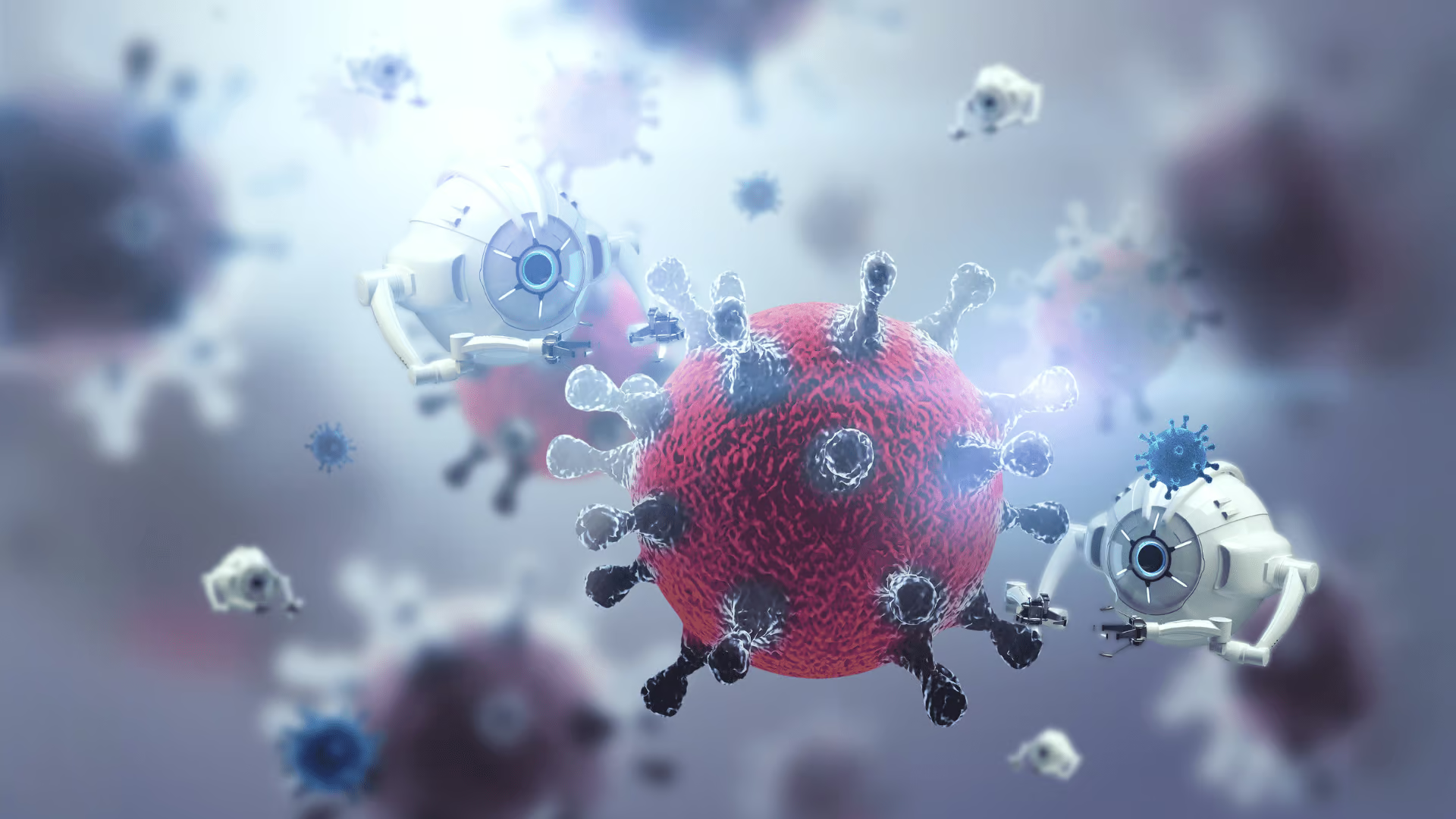
Lipid nanoparticles (LNPs) gained widespread recognition during the COVID-19 pandemic for their role in delivering mRNA vaccines. These tiny fat-based particles helped trigger a strong immune response, which is precisely what you want in a vaccine.
Scientists are now using nanotechnology for the opposite purpose: to calm the immune system in individuals with autoimmune diseases.
“The use of nanotechnology in autoimmunity is still in its very infancy. There’s incredible opportunity here,” says Michael Mitchell, Associate Professor of Bioengineering at the University of Pennsylvania.
This article highlights how nanotechnology addresses current challenges in treating autoimmune diseases, how nanotechnology is used in diagnosing autoimmune disease, and the anticipated advancements in nanotechnology for autoimmune disease treatment.
What are the Current Challenges in Autoimmune Disease Treatment?
“The biggest challenge with current autoimmune disease therapies is that most of them induce systemic immune suppression,” says Ajay Thatte, a PhD candidate and NSF fellow at the University of Pennsylvania. “That systemic immune suppression is good in terms of reducing symptoms of autoimmune disorders, but can lead to other disorders popping up,” he continues.
Finding a treatment option that doesn’t cause widespread immune suppression would help alleviate some of the side effects of current treatment options, such as increased susceptibility to infections or cancer (1).
Other challenges in current therapies for autoimmune disease include:
- Life-long compliance
- High cost
- Frequent dosing as the drugs are cleared from the body
- Only aimed at reducing inflammation and not the cause of autoimmunity
What is Nanotechnology?
By definition, nanotechnology is the manipulation of particles typically with at least one dimension that’s less than 100 nanometers in length (2). Because nanoparticles are so tiny (about 1,000 times smaller than the width of a human hair), they can sneak into specific tissues or cells, making them ideal for delivering medicine precisely where it’s needed.
Innovations in nanotechnology can help improve drug delivery systems (ex: nanoparticles that are engineered to bring drugs to specific parts of the body), monitoring health conditions (ex: measuring glucose levels with biosensors), and diagnostics (ex: nanoparticles with molecules that recognize specific disease biomarkers, or nanoparticles used with imaging techniques like MRI, CT scans) (3).
Different types of nanotechnology include:
- Lipid nanoparticles: encapsulate a therapeutic for delivery to specific cells
- Gold nanoparticles: bind therapeutic agents and enable controlled release of therapeutics at target sites (4)
- Carbon nanotubes: suppresses autoimmune responses by inhibiting the development of Th17 cells, which activate inflammation (5)
- Iron oxide nanoparticles: used as a contrast agent for MRI to detect inflammation
How can Nanotechnology Improve Targeted Delivery of Immunosuppressants and Reduce Side Effects?
“If you had approaches that could selectively yet comprehensively blunt the autoimmune attack without compromising normal immunity, then you would be able to treat the disease much more effectively than current drugs do,” says Pere Santamaria, Professor at the Cumming School of Medicine at the University of Calgary, Founder and CSO of Parvus Therapeutics, and Group Leader at Institut D’Investigacions Biomédiques August Pi i Sunyer.
One way nanotechnology can circumvent the widespread immunosuppression of currently available treatments and their associated side effects is through targeted delivery, where nanoparticles encapsulate immunosuppressive drugs and deliver them to the sites affected by disease. This methodology is what Santamaria considers the “first generation of NP-based compounds used to treat autoimmunity” (6). “There are a lot of ways to modify nanoparticles in terms of where they’re going,” says Thatte.
Targeting nanoparticles to specific locations can be achieved by:
- Chemical targeting: changing the composition of the nanoparticle shell to dictate what cell types the nanoparticle can target
- Molecular targeting: attaching a molecule (ex: antibody, peptide, sugar) to the surface of the nanoparticle that interacts with specific receptors on certain cells
- Modulating delivery routes: different delivery routes, such as intravenous, intraperitoneal, or intramuscular, can help target specific organs (ex: pancreas, which is not as accessible through IV delivery)
Using nanotechnology for targeted delivery has been tested in animal studies, including:
- Liposome delivery of prednisolone phosphate in a rat model of arthritis (7)
- Targeting of inflamed tissues with hyaluronic acid-based NPs used to target inflamed tissue and deliver methotrexate, an antirheumatic drug, to the joints of mice (8)
- Liposome delivery of methylprednisolone hemisuccinate in a mouse model of systemic lupus erythematosus (9)
How can Nanotechnology Restore Immune Tolerance?
As an alternative to delivering immunosuppressive drugs in a targeted manner, nanotechnology can also be utilized to help the immune system tolerate the body’s tissues by depleting harmful T or B cells, or by enhancing the number or function of regulatory T cells (10). “Where nanotechnology can be the most effective is in developing tolerogenic therapies,” says Thatte.
One approach to this, which is the basis of Santamaria’s company, is to use nanoparticles called Navacims. Navacims consist of disease-specific peptides complexed with proteins called major histocompatibility complexes (MHCs). These molecules bind to a specific type of autoreactive T cell and cause them to proliferate and reprogram into regulatory T cells that can dampen autoimmune attacks. “The beauty of this approach is that it can be extended to many autoimmune diseases,” says Santamaria.
Thatte and Mitchell are taking a different approach. They’re using LNPs to introduce mRNA into T cells to create immunosuppressive cells that can then suppress the proliferation of pro-inflammatory T cells (11).
Other examples of how nanotechnology has been used to promote immune tolerance include:
- Liposomes encapsulating autoantigens to promote self-tolerance in type 1 diabetes, multiple sclerosis, rheumatoid arthritis, and myasthenia gravis in experimental models (12)
- Using nanoparticles to deliver peptides to dendritic cells for the deletion of autoreactive T cells in type 1 diabetes (13)
What Role does Nanotechnology Have in Imaging and Diagnosing Autoimmune Disease?
Because of nanotechnology’s ability to target specific organs and cells, this technology can be used to diagnose autoimmune disease by identifying disease-specific features either as biosensors or contrast agents during imaging.
Nanotechnology-based Biosensors: Identifying Biomarkers
Current methods for diagnosing autoimmune disease include identifying specific biomarkers associated with the disease and assessing nonspecific indicators such as markers of inflammation (14). In addition to the unmet need for diagnostics for certain autoimmune diseases, nanotechnology-based biosensors can aid in efforts to make diagnosis faster, more convenient, and less invasive. For example, a nanomaterial-based sensor that analyzes volatile organic compounds in the breath has undergone clinical trials for the diagnosis of MS and is reported to be 90% accurate (15).
Nanotechnology-based Contrast Agents: Better Imaging
Imaging technologies can reveal signs of early autoimmune disease, which is often asymptomatic but already involves changes in the cells that line the blood vessels and lymphatic system. MRI can detect signals of early inflammation, including vascular permeability and immune cell infiltration. Imaging technologies, such as MRIs and CT scans, require a contrast agent to help visualize structures and fluids in the body. For MRIs, this means using gadolinium-based contrast agents, which have short half-lives, low specificity, and may come with adverse effects.
Nanoparticles, such as those made from iron oxide, can help overcome these limitations. Several nanotechnology-based contrast agents have entered clinical trials, for example, for the diagnosis of type 1 diabetes and multiple sclerosis (MS). Magnetic nanoparticles have been used to visualize islet inflammation, allowing for the differentiation between individuals with type 1A diabetes and non-diabetic individuals at the onset of the disease (16). For MS, nanoparticles can bind specific immune cells, help monitor their distribution, and detect their infiltration into the central nervous system. For diagnosing rheumatoid arthritis, nanoparticles containing folic acid can bind folate receptors that are overabundant in activated macrophages (17).
The Future of Nanotechnology in Autoimmune Disease Treatments
Currently, there are no nanotechnology-based medicines available to treat autoimmune diseases; however, several are undergoing clinical trials. Many components that go into nanotechnology-based therapies for autoimmune diseases are FDA-approved. “While dexamethasone is FDA approved, nanotechnologies utilizing dexamethasone have not been approved,” says Thatte.
“The components that could be used in these technologies are approved individually, but nobody has put them together.”
“Therapeutics that are getting closer to the clinic now are targeted LNP therapies that could selectively deliver to different immune cell types, such as T cells, are going to have a transformative impact,” says Mitchell.
The use of nanotechnology for targeted delivery can provide clinicians and drug developers with access to cell types and tissues that were previously unavailable. “Once you are able to better access new cell types of interest, that could give rise to several new classes of therapeutics. It’s a really exciting time for the field,” says Mitchell.

About the Author

A microbiologist turned freelance science writer who works with life science companies, nonprofits, and academic institutions on anything from news stories, explainer articles, and content marketing. She shares the wonderful world of microbes on her blog The Microbial Menagerie.

Sources
- Article Sources
Fugger, L., Jensen, L. T., & Rossjohn, J. (2020). Challenges, Progress, and Prospects of Developing Therapies to Treat Autoimmune Diseases. Cell, 181(1), 63–80. https://doi.org/10.1016/j.cell.2020.03.007
National Institute for Occupational Safety and Health (NIOSH). (2023, September). Nanotechnology. Center for Disease Control and Prevention. https://www.cdc.gov/niosh/centers/nanotechnology.html
Haleem, A., Javaid, M., Singh, R. P., Rab, S., & Suman, R. (2023). Applications of nanotechnology in medical field: a brief review. Global Health Journal, 7(2), 70–77. https://doi.org/10.1016/j.glohj.2023.02.008
Koushki, K., Keshavarz Shahbaz, S., Keshavarz, M., Bezsonov, E. E., Sathyapalan, T., & Sahebkar, A. (2021). Gold Nanoparticles: Multifaceted Roles in the Management of Autoimmune Disorders. Biomolecules, 11(9), 1289. https://doi.org/10.3390/biom11091289
Moraes, A. S., et al. (2013). The Suppressive Effect of IL-‐27 on Encephalitogenic Th17 Cells Induced by Multiwalled Carbon Nanotubes Reduces the Severity of Experimental Autoimmune Encephalomyelitis. CNS Neuroscience & Therapeutics, 19 (9), 682–687. https://doi.org/10.1111/cns.12121
Yang, Y., & Santamaria, P. (2021). Evolution of nanomedicines for the treatment of autoimmune disease: From vehicles for drug delivery to inducers of bystander immunoregulation. Advanced Drug Delivery Reviews, 176,113898. https://doi.org/10.1016/j.addr.2021.113898
Metselaar, J. M., Wauben, M. H. M., Wagenaar‐Hilbers, J. P. A., Boerman, O. C., & Storm, G. (2003). Complete remission of experimental arthritis by joint targeting of glucocorticoids with long‐circulating liposomes. Arthritis & Rheumatism, 48(7), 2059–2066. https://doi.org/10.1002/art.11140
Shin, J. M., et al. (2014). A hyaluronic acid–methotrexate conjugate for targeted therapy of rheumatoid arthritis. Chemical Communications, 50(57), 7632. https://doi.org/10.1039/c4cc02595d
Moallem, E., et al. (2016). A liposomal steroid nano-drug for treating systemic lupus erythematosus. Lupus, 25(11), 1209–1216. https://doi.org/10.1177/0961203316636468
Serra, P., & Santamaria, P. (2019). Antigen-specific therapeutic approaches for autoimmunity. Nature Biotechnology, 37(3), 238–251. https://doi.org/10.1038/s41587-019-0015-4
Thatte, A. S., et al. (2023). mRNA Lipid Nanoparticles for Ex Vivo Engineering of Immunosuppressive T Cells for Autoimmunity Therapies. Nano Letters, 23(22), 10179–10188. https://doi.org/10.1021/acs.nanolett.3c02573
Almenara-Fuentes, L., et al. (2023). A new platform for autoimmune diseases. Inducing tolerance with liposomes encapsulating autoantigens. Nanomedicine: Nanotechnology, Biology and Medicine, 48, 102635. https://doi.org/10.1016/j.nano.2022.102635
Mukhopadhaya, A., et al. (2008). Selective delivery of β cell antigen to dendritic cells in vivo leads to deletion and tolerance of autoreactive CD8 + T cells in NOD mice. Proceedings of the National Academy of Sciences, 105(17), 6374–6379. Proceedings of the National Academy of Sciences. https://doi.org/10.1073/pnas.0802644105
He, R., et al. (2023). Recent advances of nanotechnology application in autoimmune diseases – A bibliometric analysis. Nano Today, 48, 101694. https://doi.org/10.1016/j.nantod.2022.101694
Broza, Y. Y., et al. (2017). Exhaled Breath Markers for Nonimaging and Noninvasive Measures for Detection of Multiple Sclerosis. ACS Chemical Neuroscience, 8(11), 2402–2413. https://doi.org/10.1021/acschemneuro.7b00181
Gaglia, J. L., et al. (2011). Noninvasive imaging of pancreatic islet inflammation in type 1A diabetes patients. Journal of Clinical Investigation, 121(1), 442–445. https://doi.org/10.1172/jci44339
Álvarez, K., & Rojas, M. (2023). Nanoparticles targeting monocytes and macrophages as diagnostic and therapeutic tools for autoimmune diseases. Heliyon, 9(9), e19861. https://doi.org/10.1016/j.heliyon.2023.e19861