Comorbidities in Autoimmune Disease & Multiple Autoimmune Syndrome

The co-occurrence of more than two autoimmune diseases within the same person is known but only partly understood.
The combination of two autoimmune diseases is called polyautoimmunity
with common examples being systemic lupus erythematosus with Sjögren’s syndrome and rheumatoid arthritis with autoimmune thyroiditis (1, 2). The combination of three or more autoimmune diseases is called multiple autoimmune syndrome (MAS) and was described for the first time in 1988 (3). In MAS, one of the conditions typically affects the skin, with vitiligo and psoriasis as common examples (4). The coexistence of five autoimmune diseases is rarely observed (4).
MAS Classification, Diagnosis , And Prevalence
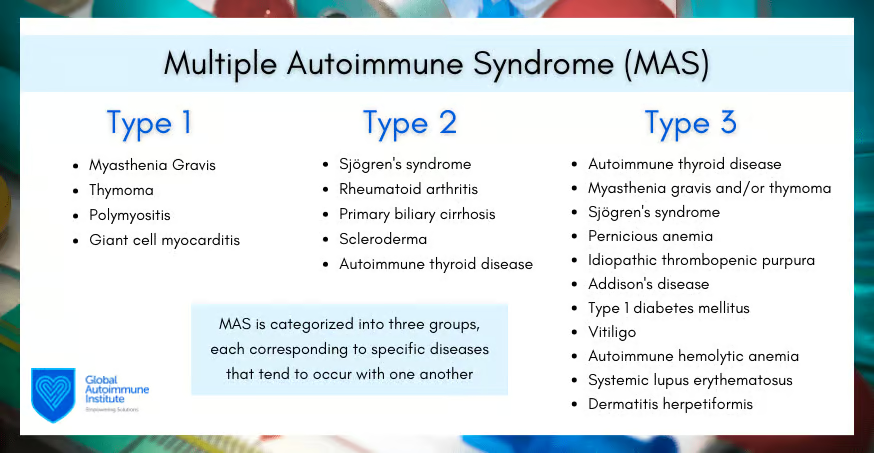
MAS is categorized into three groups, each corresponding to specific diseases that tend to occur with one another:
- Type 1 MAS includes myasthenia gravis, thymoma, polymyositis, and giant cell myocarditis
- Type 2 MAS includes Sjögren’s syndrome, rheumatoid arthritis, primary biliary cirrhosis, scleroderma, and autoimmune thyroid disease.
- Type 3 MAS includes autoimmune thyroid disease, myasthenia gravis and/or thymoma, Sjögren’s syndrome, pernicious anemia, idiopathic thrombopenic purpura, Addison’s disease, type 1 diabetes mellitus, vitiligo, autoimmune hemolytic anemia, systemic lupus erythematosus, and dermatitis herpetiformis (4).
Usually associated with thyroiditis, vitiligo is often the first skin disease to be observed in patients with MAS. Bullous pemphigoid also affects the skin and may occur with psoriasis and primary biliary cirrhosis though the frequency of the association with both conditions is still unclear. As mentioned earlier, Sjögren’s syndrome frequently coexists with systemic lupus erythematosus, but an association with rheumatoid arthritis has also been reported. Sjögren’s syndrome has also appeared to increase the risk of lymphoma (4). Other diseases seen in different combinations are autoimmune hemolytic anemia, alopecia areata, multiple sclerosis, ulcerative colitis, and scleroderma.
A more recent study reported more comorbidity patterns, with disease groups including systemic lupus erythematosus, rheumatoid arthritis, dermatomyositis, and Sjögren’s syndrome (5). Chronic active hepatitis and primary biliary cirrhosis were also seen, which may be attributed to the presence of antinuclear antibodies in some patients with these liver diseases (5). Other comorbid groups included neurological diseases (multiple sclerosis, myasthenia gravis) and gastrointestinal diseases (ulcerative colitis, Crohn’s disease). Both disease groups appeared to be associated with intestinal malabsorption and pernicious anemia (5).
Despite the evidence of specific autoimmune diseases clustering together, the clinical presentation of MAS in patients is often complex and intricate. Disease clusters are challenging to diagnose because a person might be visiting multiple specialists who will recognize different conditions. Therefore, visual characterization in research helps healthcare providers to identify MAS more readily (5, 6).
Autoimmune diseases have been observed to coexist both in individual people and within families (7). Women may be more likely to have MAS because they are more frequently affected by single autoimmune diseases overall (6). Indeed, some studies were conducted in female populations only (7, 8). Also, because research seems to focus more on diseases within certain specialties, broader studies are needed to better understand MAS prevalence, distribution, and predisposition (5, 8).
About 25 percent of patients with an autoimmune disease are at risk of developing an additional autoimmune disease.
MAS Causes and Triggers
The mechanisms that lead to MAS are still largely unknown (4). Like single autoimmune diseases, MAS may be induced by multiple environmental triggers in genetically predisposed people. The triggers that appear to play a role in the development of MAS are both external and internal and include infectious, immunologic, and even psychological factors (4).
Autoantibodies are hallmarks of autoimmune diseases and have been detected in people infected with microorganisms such as the Epstein-Barr virus (9). More recently, severe acute respiratory syndrome-associated coronavirus 2 (SARS-CoV-2), the causative agent of Coronavirus disease (COVID-19), has been connected to the development of autoimmunity (9, 10, 11, 12). Understanding more about the relationship between COVID-19 and autoimmune diseases, such as Guillain-Barré syndrome and Kawasaki disease, will provide helpful information on multiple disease associations, leading to better management strategies (10).
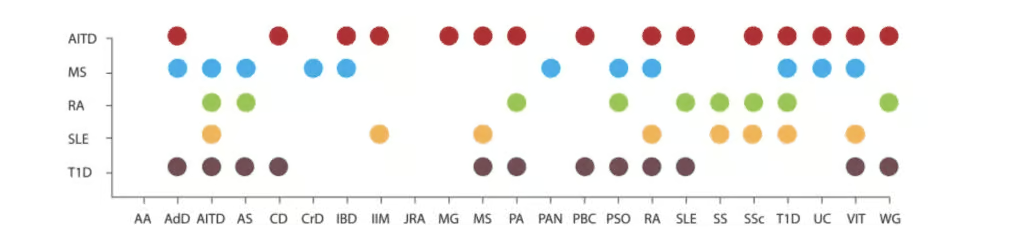
Cardenas-Roldan J, Rojas-Villarraga A, Anaya JM. How do autoimmune diseases cluster in families? A systematic review and meta-analysis. BMC medicine. 2013;11:73.
Image Copyright © 2013 Cárdenas-Roldán et al; licensee BioMed Central Ltd.
Genetic studies have identified susceptibility genes shared by several autoimmune diseases (13, 14). A meta-analysis conducted for ten autoimmune diseases with onset in childhood, including type 1 diabetes, celiac disease, juvenile idiopathic arthritis, and ulcerative colitis, revealed that 19 of the identified gene sites were shared by at least three autoimmune diseases (15). Recent evidence has connected autoimmunity to the exposome, defined as a person’s lifetime exposure to external (stress, food, infections) and internal (inflammation, gut microbiota) factors in the pathophysiology of autoimmune disease (16, 17). Although these studies do not address MAS as a disease entity, the authors mentioned that factors such as microbiome disruption could lead to multiple autoimmune disorders (17).
MAS Life Expectancy and Management
The life expectancy of patients with MAS is an ongoing mystery because of the complexity of managing concurrent disorders. Mortality also depends on how autoimmune diseases with different fatalities combine. Although there is no cure for autoimmune disease, symptoms can often be carefully managed (9). Current therapies are increasing life expectancy for individual conditions, but because treating patients for one disorder may predispose them to others, managing two or more concurrent conditions may prove to be complicated. Also, treatments such as immunosuppressants cause significant side effects, including multiple infections (18). Increased mortality is observed for multiple sclerosis and vasculitis; thus, having more than one of these conditions may lower life expectancy (19, 20). More recently, systemic autoimmune diseases (sarcoidosis and amyloidosis in addition to lupus, Sjögren’s syndrome, and vasculitis) have been associated with comorbidities (cardiovascular disease, cancer), leading to high mortality (21).
Better Clinical Coordination and More Research Needed
A deeper understanding of the clinical picture of MAS and improvements in communication across multiple medical specialties will help providers diagnose and manage patients more successfully. Also, more research is needed to unveil causes and triggers, including the role of SARS-CoV- 2 in autoimmunity, and to understand comorbidity patterns better.
About The Author
Damiana Chiavolini, MS, PhD is a freelance writer who specializes in medical and life science topics. As a trained researcher, she authored journal articles in the areas of infection and immunity and wrote booklets and book chapters about different diseases. As a professional communicator, she writes feature articles for magazines and other publications and produces content for higher education platforms. Damiana is also an experienced academic editor, microbiology educator, writing coach, and fragrance blogger. She is a contributing member of the American Medical Writers Association and the current president of the association’s Southwest chapter.

Sources
- Article Sources
Pasoto S.G. 2019. Sjögren’s syndrome and systemic lupus erythematosus: links and risks. Current Access Rheumatology. 11:33-45 https://pubmed.ncbi.nlm.nih.gov/30774485/
Waldenlind K. 2018. Risk of Thyroxine-Treated Autoimmune Thyroid Disease Associated With Disease Onset in Patients With Rheumatoid Arthritis. JAMA Network Open. 1(6):e183567.https://pubmed.ncbi.nlm.nih.gov/30646250/
Humbert P. and Dupond J.L. 1988. [Multiple autoimmune syndromes]. Annales de Médicine Interne. 39(3):159-68.https://pubmed.ncbi.nlm.nih.gov/3059902/
Cojocaru M. 2010. Multiple Autoimmune Syndrome. Maedica 5(2):132–134.https://www.ncbi.nlm.nih.gov/pmc/articles/PMC3150011/
Eaton W.E. et al. 2020. Comorbidity of Autoimmune Diseases: A Visual Presentation. Autoimmunity Reviews. 19(10):102638. https://pubmed.ncbi.nlm.nih.gov/32801041/
Cleveland Clinic. Autoimmune Diseases. Autoimmune Diseases: Causes, Symptoms, What Is It & Treatment (clevelandclinic.org)
Somers E.C. 2006. Autoimmune diseases co-occurring within individuals and within families: a systematic review. Epidemiology. 17(2):202-17. https://pubmed.ncbi.nlm.nih.gov/16477262/
Desai M.K. and Brinton R.D. 2019. Autoimmune Disease in Women: Endocrine Transition and Risk Across the Lifespan. Frontiers in Endocrinology. 10:265. https://pubmed.ncbi.nlm.nih.gov/31110493/
National Institutes of Health. June 2022 Newsletter. Understanding Autoimmune Diseases: When Your Body Turns Against You. https://newsinhealth.nih.gov/2022/06/understanding-autoimmune-diseases
Dotan A. 2021. The SARS-CoV-2 as an instrumental trigger of autoimmunity. Autoimmunity Reviews. 20(4):102792. https://pubmed.ncbi.nlm.nih.gov/33610751/
Hosseini P. 2022. Multisystem Inflammatory Syndrome and Autoimmune Diseases Following COVID-19: Molecular Mechanisms and Therapeutic Opportunities. Frontiers in Molecular Biosciences. 9: 804109.https://www.ncbi.nlm.nih.gov/pmc/articles/PMC9046575/
Liu Y. 2021. COVID-19 and autoimmune diseases. Current Opinions in Rheumatology. 33(2):155-162.https://pubmed.ncbi.nlm.nih.gov/33332890/
Castiblanco J. 2013. Introduction to Genetics of Autoimmune Diseases. In Anaya JM, Shoenfeld Y, Rojas-Villarraga A, et al., editors, Autoimmunity: From Bench to Bedside. El Rosario University Press.https://www.ncbi.nlm.nih.gov/books/NBK459433/
Ortíz-Fernández L. 2022. A Summary on the Genetics of Systemic Lupus Erythematosus, Rheumatoid Arthritis, Systemic Sclerosis, and Sjögren’s Syndrome. Clinical Reviews in Allergy and Immunology. 10.1007/s12016-022-08951-z. https://pubmed.ncbi.nlm.nih.gov/35749015/
Li Y.R. 2015. Meta-analysis of shared genetic architecture across ten pediatric autoimmune diseases. Nature Medicine. 21(9):1018-27. https://pubmed.ncbi.nlm.nih.gov/26301688/
Vojdani A. and Vojdani E. 2021. The Role of Exposomes in the Pathophysiology of Autoimmune Diseases I: Toxic Chemicals and Food. Pathophysiology. 28(4):513-543. https://pubmed.ncbi.nlm.nih.gov/35366249/
Vojdani A. 2022. The Role of Exposomes in the Pathophysiology of Autoimmune Diseases II: Pathogens. Pathophysiology. 29(2): 243–280. https://www.ncbi.nlm.nih.gov/pmc/articles/PMC9231084/
Dropulic L.K. and Lederman H.M. 2016.Overview of Infection in the Immunocompromised Host. Microbiology Spectrum. 4(4): 10.1128. https://pubmed.ncbi.nlm.nih.gov/27726779/
Scalfari A. 2013. Mortality in Patients with Multiple Sclerosis. Neurology. 81(2):184-92.https://pubmed.ncbi.nlm.nih.gov/23836941/
Tan J.A. 2017. Mortality in ANCA-associated vasculitis: Annals of Rheumatic Disease. A Meta-Analysis of Observational Studies. 76(9):1566-1574. https://pubmed.ncbi.nlm.nih.gov/28468793/
Mitratza M. 2021. Systemic Autoimmune Disease as a Cause of Death: Mortality Buren and Comorbidities. Rheumatology. 60(3):1321-1330. https://pubmed.ncbi.nlm.nih.gov/32944773/