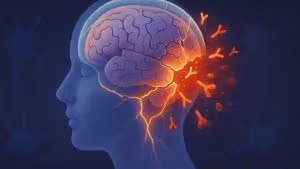
Understanding Brain Fog in Autoimmune Disease

Cognitive changes are increasingly recognized as part of the body’s immune response. Research into neuroimmune interactions has shown that inflammation can alter how the brain processes information, affecting focus, memory, and mood. In autoimmune diseases, where the immune system mistakenly targets the body’s own tissues, these effects can be especially pronounced, sometimes appearing long before structural brain changes are detectable.
Julius Birnbaum, MD, MHS, Associate Professor of Rheumatology at the University of Pittsburgh Medical Center, and Elizabeth Yarnell, ND, MS, CNS, a traditional naturopath specializing in multiple sclerosis and autoimmunity, provide insight into how immune signaling, inflammation, and lifestyle factors may contribute to this experience commonly described as brain fog.
What Is Brain Fog?
Brain fog refers to changes in cognitive function that can make everyday thinking and memory tasks more difficult. It has recently gained increased recognition when identified in people with long-COVID (1). While not formally classified as a medical diagnosis, brain fog involves a collection of symptoms that can significantly disrupt daily life, affecting work, relationships, and overall well-being. In some cases, it can become severe enough to make it difficult for individuals to continue working.
Brain fog is a common complaint among people with autoimmune disorders (2). It can develop suddenly or gradually and may not always correlate with the severity of the underlying disease.
Common Symptoms of Brain Fog:
- Disorientation or feeling mentally “lost” or confused.
- Difficulty sustaining attention and concentration, making it difficult to focus on tasks.
- Impaired judgment and problem-solving leading to challenges with decision-making and logical thinking.
- Memory issues such as forgetting names, dates, or details more frequently.
- Language difficulties, such as struggling to find the right words in conversation.
Dr. Birnbaum notes that cognitive issues in autoimmune conditions, often described as cognitive slowing, can differ from those seen in non-autoimmune neurodegenerative conditions.
Alzheimer’s disease, for example, typically affects the outer cortex, the outer layer of the brain, and these individuals often experience difficulties with reading, calculation, and understanding or expressing language. Dr. Birnbaum notes, “In most autoimmune diseases, there is less impairment of these cognitive domains; and therefore, fewer problems with reading, calculation, understanding, or expressing language.”
Brain fog can make routine tasks seem challenging. Yarnell says, “Brain fog may make it harder to follow the characters in a movie, or to remember many plot lines in a television series when episodes are only released weekly. You may find yourself rewatching earlier episodes before viewing the latest in order to be reminded of who is who and what is going on.”
What Causes Brain Fog?
Research into the potential multiple underlying causes of brain fog is ongoing. Some autoimmune disorders, like multiple sclerosis, directly affect the central nervous system, leading to cognitive symptoms. However, brain fog also occurs in autoimmune conditions that do not directly impact the brain.
One explanation involves the blood-brain barrier, a network of cells and blood vessels that regulates what substances can enter the brain. When this barrier becomes compromised, inflammatory molecules and autoantibodies can infiltrate the brain, triggering inflammation and potentially damaging neural tissue (3).
Additional factors not directly caused by autoimmune activity may also contribute to brain fog, including:
- Lack of sleep
- Hormonal changes (such as perimenopause/menopause)
- Certain medications and illicit substances (4)
Systemic inflammation seen in autoimmune disorders can go undetected in the brain. Yarnell suggests considering inflammatory effects on the brain when other signs and symptoms of systemic inflammation are present. She notes, “We can’t see that our brain is inflamed when we look in the mirror, but we might notice that our rings are tight or we feel stiffer when rising, or our pants are tighter today than they were yesterday, or we feel weepy or irrational.”
Which Autoimmune Diseases are Associated with Brain Fog?
Brain fog is associated with both central nervous system-related autoimmune disorders, such as multiple sclerosis and autoimmune encephalitis (5), and non-central nervous system-associated disorders, including (3):
- Rheumatoid arthritis
- Systemic lupus erythematosus
- Type 1 diabetes
- Inflammatory bowel disease (Crohn’s disease and ulcerative colitis)
- Antiphospholipid syndrome
- Celiac disease
How Is Brain Fog Diagnosed?
There is no single test to diagnose brain fog. Instead, doctors rely on a patient’s medical history, symptom descriptions, and physical exams.
Some individuals may also benefit from:
- Cognitive assessments can be self-administered or performed by a healthcare provider to measure cognitive function.
- Occupational therapy evaluations assess how cognitive difficulties impact daily tasks, particularly in work settings (6).
- Imaging studies such as MRI or PET scans can sometimes reveal structural damage or inflammation.
Even if imaging or cognitive tests appear normal, individuals may still experience brain fog. Many available assessments are not sensitive enough to detect subtle cognitive dysfunction.
How Is Brain Fog Treated?
Managing brain fog typically involves a multi-faceted approach, including treating the underlying autoimmune disorder, addressing contributing factors, and adopting lifestyle modifications to support cognitive function.
Treating the Underlying Condition
In some cases, brain fog improves when the autoimmune disease is well-managed. For example, people with hypothyroidism often report cognitive improvements after starting thyroid medication (7). Addressing the primary autoimmune disorder is an essential first step in managing brain fog.
Dr. Birnbaum emphasizes the importance of paying attention to the causes of cognitive symptoms not directly related to autoimmune disorders. He says, “This can include poor sleep, depression, and a pain syndrome called fibromyalgia that causes widespread pain. Optimizing sleep, managing depression, and treating fibromyalgia can greatly improve cognitive impairment.”
Addressing Other Contributing Factors
Certain risk factors make people with autoimmune diseases more susceptible to cognitive difficulties. Addressing these can help lessen brain fog symptoms. Key factors include:
- Chronic stress
- Aging-related cognitive changes
- Poor physical health
- Hormonal fluctuations (e.g., menopause)
- Sleep disturbances
- Emotional health issues (such as anxiety or depression)
- Medications and substance use (7)
Lifestyle adjustments to improve sleep, reduce stress, and maintain a balanced diet can significantly enhance cognitive function.
Occupational Therapy
Occupational therapists can help individuals develop strategies to manage cognitive challenges in daily life. Interventions may include:
- Cognitive rehabilitation: Exercises and strategies to improve memory and problem-solving skills
- Energy management techniques: Learning how to pace activities to avoid mental exhaustion
- Workplace adaptations: Adjustments to reduce cognitive strain in professional settings (6)
Occupational therapy can be crucial to treatment, equipping individuals with practical tools to navigate daily life more effectively.
Yarnell explains that reducing one’s exposure to inflammatory triggers is essential to reducing the pain and discomfort of autoimmune disorders. She notes lifestyle adjustments can have a significant impact on health and well-being. Yarnell suggests:
- Eating an anti-inflammatory diet of more whole foods than processed foods
- Avoidance of synthetic additives and preservatives
- Eliminating chemicals and chemical scents from living environments
Addressing brain fog centers around addressing those modifiable factors that are part of everyday life.
Final Thoughts
Brain fog is a real and often disruptive symptom of autoimmune diseases. While there is no one-size-fits-all solution, understanding the potential causes and adopting strategies to manage cognitive function can make a significant difference.
If you or a loved one is experiencing brain fog, working with a healthcare provider to identify possible contributors and develop a personalized management plan is key.

About the Author

Tracy is a writer, child and adolescent psychiatrist, and leadership coach. Her journey into the world of autoimmune diseases began when she experienced sudden onset symptoms of multiple sclerosis early in her medical career. This personal experience, combined with her intense curiosity, has informed her work and writing in the field. As a writer, Tracy has contributed to various books and written articles related to mental health. She’s also written on various medical topics regularly contributing to publications such as GoodRx, Psychology Today, and Psychotherapy.net

Sources
- Article Sources
Asadi‐Pooya, A. A. et al., (2022). Long COVID syndrome‐associated brain fog. Journal of medical virology, 94(3), 979-984.
Oláh, C., et al. (2020). Cognitive dysfunction in autoimmune rheumatic diseases. Arthritis research & therapy, 22, 1-7.
Fan, K. Q. et al., (2024). The clinical features and potential mechanisms of cognitive disorders in peripheral autoimmune and inflammatory diseases. Fundamental Research, 4(2), 226-236.
Weddell, J., et al. (2024). Cognitive and physical fatigue—the experience and consequences of ‘brain fog’after spontaneous coronary artery dissection: a qualitative study. European Journal of Cardiovascular Nursing, 23(8), 855-862.
Uy, C. E., et al. (2021). Autoimmune encephalitis: clinical spectrum and management. Practical neurology, 21(5), 412-423.
Skiffington, H., et al. (2025). More than “brain fog”: Cognitive dysfunction and the role of occupational therapy in Long covid. Cardiopulmonary Physical Therapy Journal, 36(1), 39-49.
Samuels, M. H., et al. (2022). Brain fog in hypothyroidism: what is it, how is it measured, and what can be done about it. Thyroid, 32(7), 752-763.