Finding Purpose & Fulfillment with Autoimmune and Chronic Disease

Leading a Purposeful Life
People with autoimmune diseases or other severe chronic illnesses learn how to manage their condition but also strive to find purpose, stability, and a way forward. Pursuing these goals while living with a chronic condition involves discovering personal and professional opportunities that fit a new lifestyle but also reclaiming agency, dignity, and the sense of being helpful to others.
To learn more about finding purpose and fulfillment in everyday life, building resilience, and pursuing opportunities to turn one’s lived experience into ways of helping and engaging others, we spoke with Kara Wada, MD, founder of the Immune Confident Institute in Columbus, OH, and Brenda Snow, multiple sclerosis (MS) patient, advocate, and founder of Snow Companies.
The Transition Point: Moving From Coping to Asking What’s next?
When living with or recovering from an autoimmune disease or chronic illness, people reach a turning point where coping alone may no longer be enough. Living fully is about transitioning from accepting a chronic condition to feeling hopeful, all the way to building resilience and feeling empowered to pursue opportunities that will be important to oneself and others. Evidence indicates that people who find meaning or purpose in the adversity that comes with a chronic illness, such as cancer, diabetes, and inflammatory bowel disease, have greater psychological well-being than those who have not yet found meaning (1, 2).
Healthcare professionals play an essential role in helping people manage their chronic illness in their everyday life (3). However, both professionals and advocates can also guide people to pursue professional opportunities, volunteer positions, or personal goals, while still handling symptoms.
Reaching these milestones can take time and patience.
“Depending on one’s symptom burden, redefining identity and achievement is crucial. Not uncommonly, traditional career paths or full-time work may not be realistic in the short or long term,” says Wada.
“When I was first diagnosed with MS, making my daughter toast in the morning was an incredible accomplishment that fueled me. Later, when I was building a disrupting healthcare agency, my ambition shifted. Both held the same weight of significance in my journey,” says Snow.
Redefining Independence, Achievement, and Fulfillment
While traditional career paths or full-time work may not be instantly feasible, Wada suggests redefining self-sufficiency as a crucial first step.
“I encourage patients to think in terms of functional independence: the ability to manage day-to-day life in ways that feel meaningful, even if support is required for certain tasks,” says Wada. “Realistic self-sufficiency balances autonomy with health. Acknowledging that asking for help isn’t failure is very often not easy, but a strategy that can help sustain participation in work or hobbies.”
As someone who lives with MS, Snow underlines the importance of filling the days to find meaning, while maintaining flexibility.
“Early in my diagnosis, I had a job that required me to work long hours in front of a computer. It became physically challenging because of the impact my MS had on my vision. So, I made adjustments but continued to work because it fulfilled me,” says Snow.
Can I Work Again With Chronic Illness and Autoimmune Disease?
Pacing, managing energy, building a routine, and setting up systems that reduce fully relying on others are all essential components of building independence and intentionally exploring flexible work, creative outlets, or volunteering opportunities that respect health boundaries.
Wada takes an active role in advising her patients to pursue goals and opportunities. “Often this means reframing success from ‘doing everything independently’ to achieving milestones that matter to them. Flexible work, creative projects, volunteering, or advocacy roles are all areas where folks can explore goals that match their energy, capabilities, and health priorities,” she mentions. “We discuss pacing, energy management, and practical strategies to build routines and systems that minimize stress on their bodies while still allowing them to contribute.”
Snow’s work centers on offering validation and strategies to people who want to rebuild their lives. “I’ve spoken with many patients who thought that they had to leave their ambition behind after getting their diagnosis. Quite the contrary – it’s more of a reason to keep fighting,” she says.
How do I Know if I am Pushing Too Hard?
Exploring opportunities and being actively involved in projects and initiatives are essential aspects of people’s well-being, but drive and ambition should be balanced with rest and energy conservation.
Wada emphasizes warning signs of someone pushing too hard:
- Persistent fatigue that doesn’t improve with rest
- Flare-ups of autoimmune symptoms
- Disrupted sleep
- Increased anxiety or depression
“When these [signs] occur, it’s a signal to scale back commitments, possibly adjust expectations, and strengthen support systems,” cautions Wada. “By aligning personal goals with health realities and formal pathways, individuals with chronic illness can contribute meaningfully, maintain independence, and find purpose while honoring their body’s limits,” she adds.
Snow emphasizes that adjusting goals and decisions along with setting boundaries are crucial to keeping energy levels up. “Especially as women, we have a hard time saying ‘no’, so I remind people that ‘no’ isn’t a dirty word. It’s better to turn something down and reserve gas in your tank than to deplete yourself,” she advises.
How Can I Help Others Through My Own Experience?
The experience of a person with autoimmune disease or other chronic illnesses can become a resource to help others responsibly.
“Experiences with chronic illness are valuable in healthcare and advocacy, providing insight, empathy, and guidance that formal training alone can’t offer,” says Wada.
“Lived experience can be recognized through peer support roles, mentoring, advocacy groups, coaching, or part-time caregiving positions.”
Pathways to formalize these roles include:
- Peer support through mentorship programs and certifications
- State programs for disability advocacy, health coaching, or patient navigation
- Programs that offer training and structured volunteer opportunities
Snow points out that healthcare and life sciences systems need to be more aware of patient needs. “Life sciences have done an incredible job of introducing life-changing therapeutics to patients, but they haven’t always done a great job of understanding that patients are much more than their disease,” says Snow. “Through my work, I’ve been able to educate the healthcare/life sciences spaces by bringing to life the lived experiences of patients.”
Another way to support others is by sharing your personal experience. Patient stories help raise awareness, build community, and give others navigating similar challenges a sense that they are not alone. GAI invites individuals to share their experiences through its How to Share Your Story page, helping amplify patient voices and perspectives.
Professional Associations and Organizations for Work Accommodations, Patient-Engagement, and Resources
Building Resilience Where Resources Are Limited
Programs, resources, and opportunities regularly help people find purpose and meaning, but research has also focused on strengthening the resilience of people with chronic illnesses living in low-resource communities (4). Through personal resilience and measures that encourage keeping occupied and connecting with others who may provide support, people can better adapt to ongoing adversity caused by ongoing illnesses. Investigators created a preliminary model of resilience that could help guide future research and support strategies aimed at improving quality of life and health outcomes in settings with limited resources (4).

About the Author
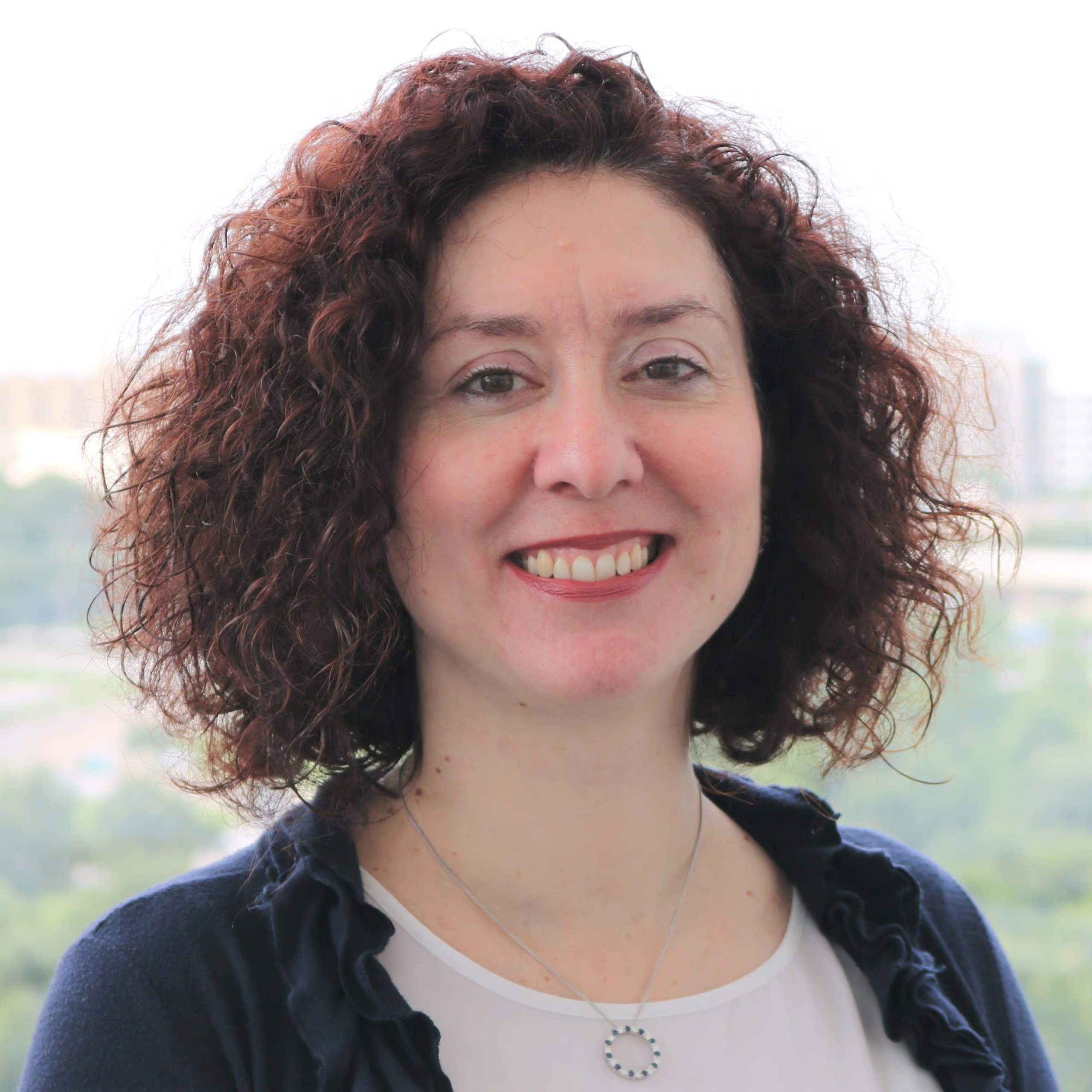
A freelance writer who specializes in medical and life science topics. As a trained researcher, she authored journal articles in the areas of infection and immunity and wrote booklets and book chapters about different diseases. As a professional communicator, she writes feature articles for magazines and other publications and develops content for higher education platforms. Damiana is also an experienced academic editor, microbiology educator, writing coach, and fragrance blogger. She is a contributing member of the American Medical Writers Association and a past-president of the association’s Southwest Chapter.

Sources
- References
Conduah A.K. et al. (2025). Coping With Chronic Illness: A Systematic Review of Adaptive Strategies Across Cancer, COPD, Diabetes and Heart Disease. Public Health Chall. 4:e70129.
Purc-Stephenson R.J. & Edwards R. (2024). Finding meaning in chronic illness and its relationship to psychological well-being. PLOS Ment Health. 1:e0000121.
Hajdarevic S. et al. (2025). Becoming whole again — Caring for the self in chronic illness — A narrative review of qualitative studies empirical studies. J Clin Nurs. 34:754-771.
Moore T.L. (2024). Resilience of individuals with chronic illness who reside in low resource communities: a concept analysis. Int J Nurs Stud Adv. 7:100215.