How Food Can Influence Autoimmune Disease
Autoimmunity is significantly impacted by genetic and environmental factors, with the latter encompassing pathogens, food, and toxic chemicals. But…
What Are the Mechanisms at Play When it Comes to Food and Autoimmune Disorders?
How Does Organic or Non-Organic Food Contribute to Autoimmune Disorders?
What Effects Do Red Meat and Dairy Have on the Body and the Immune System?
What Foods are Recommended to Lessen Autoimmune Risk?
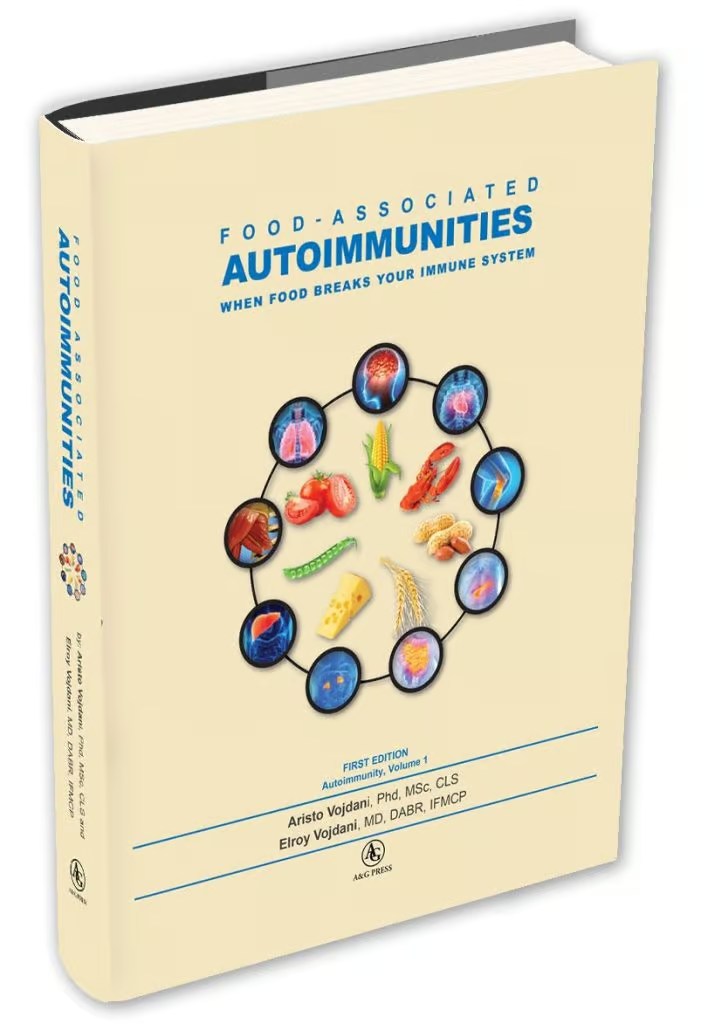
To answer these questions, The Global Autoimmune Institute consulted Dr. Aristo Vojdani, author of “Food Associated Autoimmunities: When Food Breaks Your Immune System.”
What Are The Mechanisms At Play When It Comes To Food And Autoimmune Disorders?
In the context of autoimmune diseases, molecular mimicry refers to a phenomenon where certain foreign substances or pathogens have structural similarities to components of the body’s own tissues.
When it comes to food, Vojdani explains that certain components of food and human tissue share homology. When certain components of food and human tissue share homology, it means that they have similarities in their molecular structures or sequences.
This resemblance can lead to confusion in the immune system. Therefore, when a food component is not properly digested and absorbed in the gastrointestinal tract, it can trigger an immune response in some individuals. This immune response may involve the production of antibodies against the undigested food component. The antibody against that component may then cross react with human tissue and turn against it, initiating an autoimmune disease.
How Does Organic Or Non-Organic Food Contribute To Autoimmune Disorders?
It doesn’t matter whether food is organic or non-organic, because amino acid sequences are the same regardless, in this regard, says Vojdani. However, if chemicals are added to a food, the calculus may change.
Food additives, preservatives, pesticides, herbicides, and more may manage to interact with proteins and even modify a proteins’ structure. Such chemical interactions can lead to the formation of new compounds, some of which may be toxic or allergenic. In sum, says Vojdani, that means that the body may react more strongly against food that contains more toxic chemicals than food that does not contain toxic chemicals.
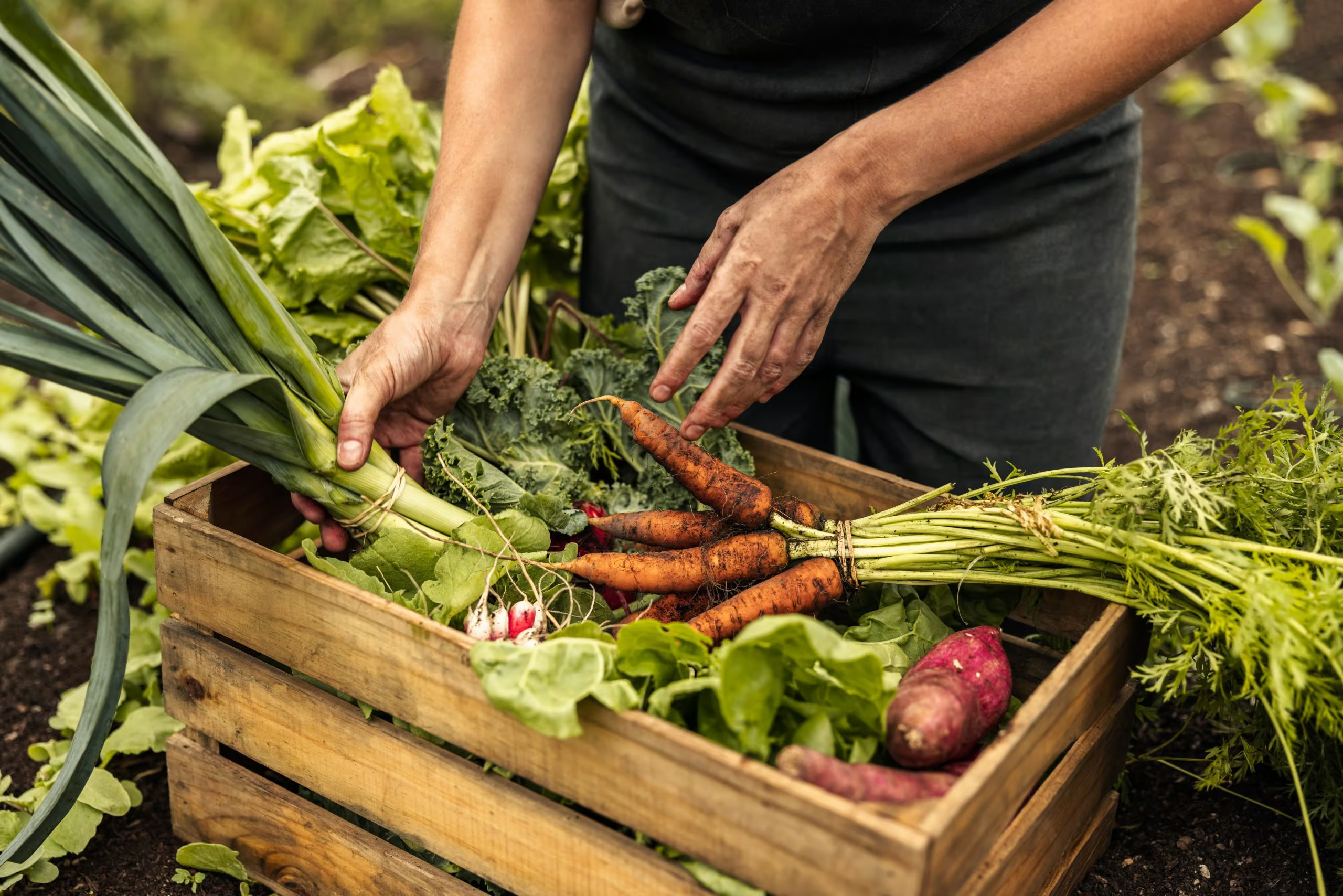
It should be noted that organic food is not completely free of toxic chemicals either. “Even organic foods contain significant amounts of chemicals,” says Vojdani. But organic food does have less toxic chemicals than non-organic food.
In sum, minimizing the possibility for chemicals to bind to the proteins and peptides of food minimizes the possibility of food antigens crossing gut barriers and entering the blood, allowing antibodies to attack tissues.
Vojdani notes that when it comes to organic food, there is a common refrain that people are wasting their money because some may find that both types of foods have similar amounts of nutrients — or that organic food even has less nutrients. However, organic foods do have less toxic chemicals, which are a big contributor to autoimmune diseases.
What Effects Do Read Meat And Dairy Have On The Body And Immune System?
Diet has been closely tied to both alleviating and exacerbating autoimmunity.
A well-known study by Gershteyn and Ferreira from the University of California San Francisco published in 2019 matched epitopes between 77 autoimmune diseases and 14 species of animals and plants used for food.
An epitope is the part of an antigen molecule to which an antibody attaches itself. The authors did this because diet was already being proposed by some as a risk factor for some autoimmune diseases. Gershteyn and Ferreira’s own epitope matching between the autoimmune diseases and the foods found that red meat (cow, sheep, goat, pig) had the highest matching index, poultry and fish (chicken, turkey, duck. tilapia, salmon) had an intermediate index, and cereals (rice, quinoa, soybean, rye and wheat) had a low index. The standout hit was pig or pork, with generally about 10-15 times the number of matching epitopes as the other species. The higher the number of matches, the greater possibility of autoimmune problems arising, with pork apparently the food to watch out for.
For Vojdani, that’s mostly because meat has more proteins that are identical to human tissue when compared to foods like vegetables. Pork, for example, has the highest homology with the human body, with pigs frequently used as animal models for medical research due to their biological similarity with humans.
Likewise, there are many studies which have examined the impact of dairy. Vojdani notes that the consumption of cows’ milk products, for example, has been associated with an increased risk of autoimmunity. It has also been proposed as a contributor to the development of type 1 diabetes and Multiple Sclerosis.
What Foods Are Recommended To Lessen Autoimmune Risk?
While diet alone cannot guarantee the prevention of autoimmune diseases, certain foods and dietary patterns are believed to support a healthy immune system and reduce the risk of autoimmune conditions.
“Without any reservations, I recommend dairy free and gluten free diets for individuals with a history of neuro-autoimmune disorders,” Vojdani says. In the case of gluten, some individuals with autoimmune thyroid conditions, such as Hashimoto’s thyroiditis or Graves’ disease, may exhibit cross-reactivity between gluten antibodies and proteins in the thyroid gland.
As such, Vojdani recommends starting the day with fruits, vegetables, coconut or almond milk, and fiber or flaxseed. He also recommends diets that are low in salt and have no artificial sweeteners.