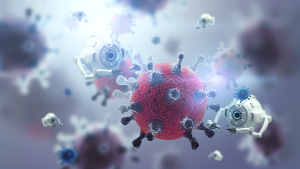
The Promise of Artificial Intelligence in Autoimmune Disease Healthcare

From Early Detection to Personalized Care
GAI consulted with two experts, Harvey Castro, MD, an emergency medicine physician and AI in healthcare expert and Michelle Mello JD, PhD, professor of law and health policy at Stanford University School of Medicine to discuss how artificial intelligence (AI) has emerged as a groundbreaking frontier in healthcare, offering revolutionary innovations alongside significant challenges. In the realm of autoimmune disease research and patient care, AI appears to be a powerful and transformative tool.
What is AI?
AI encompasses an area of digital technology involved with how machines learn and use what they’ve learned to imitate human behavior. Behaviors can range from carrying out basic tasks to analyzing vast amounts of information to solve problems. One type of AI, machine learning (ML), is particularly exciting in healthcare. ML focuses on recognizing patterns in data sets and using what is “learned” to better understand the body and disease.
How is AI transforming healthcare?
Through ML, AI is already being applied in the growing field of precision medicine. Precision medicine uses specific patient characteristics and health information to design treatments most likely to help that individual. Precision medicine has a growing presence in cancer treatment, where AI is enabling earlier diagnosis, new drug discovery, and innovation for more targeted approaches to research and care (1).
Harvey Castro, MD, an emergency medicine physician and AI in healthcare expert, sees the opportunities for AI in diagnosis, treatment planning, and communication. He notes, “AI algorithms, especially deep learning-based ones, can analyze medical images with high accuracy. For instance, AI systems detect early signs of diseases like cancer from radiographic images, often more precisely than human radiologists.” Dr. Castro also sees the potential for AI in engaging and educating patients through tools such as AI-powered chatbots and virtual assistants. These tools are available 24/7 to meet a variety of healthcare-related needs.
AI can also support healthcare providers. Michelle Mello JD, PhD, professor of law and health policy at Stanford University School of Medicine, sees the potential for AI in supporting better-informed decision-making for healthcare providers. She believes that AI has the potential to overcome some of the human sources of bias that might lead physicians to different kinds of conclusions. She also notes that AI’s benefits might include “Helping us better risk stratify patients so that the resources can be targeted to the ones that are most likely to benefit, whether that’s additional screening or your supervision during hospitalization or post-discharge check-ins.”
AI is rapidly evolving in various areas of research and patient care (2):
Using genetic information to better understand disease mechanisms and find potential treatment targets.
Analyzing large amounts of research and patient data to inform research and patient care.
Finding abnormalities in tissue samples that are undetectable by humans.
Detecting abnormalities in radiological studies that the human eye misses.
Developing devices to help prevent and manage illnesses (3).
How can AI benefit autoimmune disease research and care?
Autoimmune diseases form a heterogeneous group of disorders. AI is helping researchers and healthcare providers decipher this complexity by finding the multiple target inflammatory pathways that trigger autoimmune diseases. This will help healthcare providers better understand diagnoses, disease progression, and treatment (4).
Variability is found between people affected by the same autoimmune disease and across different types of autoimmune diseases. Many autoimmune diseases share similar generalized symptoms, such as fatigue and cognitive changes, complicating understanding and treatment. AI can help identify the unique features of each autoimmune disease and design more appropriate therapies.
Dr. Mello sees an exciting role of AI in improving care for people with autoimmune diseases, noting the role of AI in reducing care fragmentation.
She reflects, “I think that those patients are often being cared for by many different physicians. For patients like that, who find themselves having to tell their story over and over again to the next [physician], it would be really wonderful if some outcome of this would be [to] make care simpler for the patient and for physicians who are functioning as part of a care team.”
AI’s impact on autoimmune disease care and research
Early detection of an autoimmune disease
Autoimmune diseases are typically diagnosed in adulthood. By analyzing large amounts of patient information, AI has the potential to enable earlier diagnosis and treatment by detecting subtle differences in patient data. This may allow for disease detection before the onset of symptoms. AI has been studied for early diagnosis of multiple sclerosis (MS) and systemic lupus erythematosus (SLE) (5).
Dr. Castro says that radiology, oncology, and cardiology are all on the leading edge of embracing AI for early disease detection, noting that “Oncology leverages AI for early detection of cancers, treatment personalization, and monitoring patient progress.” Similar uses for AI are being explored in autoimmune diseases.
Predicting the risk of developing an autoimmune disease
AI can identify risk factors in individuals before the onset of an autoimmune disease. These factors can help identify people at risk for developing autoimmune diseases, such as inflammatory bowel disease (IBD), SLE, rheumatoid arthritis (RA), and type 1 diabetes (T1D) (5).
Improving accurate diagnosis of autoimmune disease
AI can distinguish between those who have a specific autoimmune disease and those who do not or who have a different autoimmune disease. For example, ML has been used to differentiate people with celiac disease from those with irritable bowel syndrome (6).
Identifying subtypes of autoimmune disease
AI can classify subtypes of autoimmune diseases based on features such as disease severity or specific symptoms. This has been shown in diseases like RA, IBD, and MS (5).
Understanding the progression of autoimmune disease
AI can clarify disease severity and treatment responses, as seen in studies on RA and IBD, improving the management of these conditions (5).
Enhancing monitoring and management of autoimmune disease
AI models for SLE, Sjogren’s syndrome, and RA have confirmed the complexity of these diseases, aiding in more targeted treatment design (7). Healthcare providers have used AI tools to improve glucose monitoring in T1D, enhancing disease management (5).
What are the ethical considerations in AI healthcare applications?
While AI offers significant advancements in medical research and care, there are ethical issues, such as patient data collection and transparent clinical decision-making, to consider. Dr. Mello notes, “My biggest concern is just the speed with which it’s happening, which has very good reasons behind it. I understand the exuberance. There’s a lot that this development can improve about healthcare, but it hasn’t left a great deal of time for healthcare organizations to closely evaluate the tools that they’re thinking about implementing.” She notes that there aren’t regulatory requirements to guide the implementation of AI in healthcare settings, and many healthcare organizations aren’t vetting or monitoring AI apps themselves.
Ethical considerations include:
- AI Errors: Like humans, AI can make errors. Minimizing errors and ensuring accountability and transparency when they occur is crucial.
- Patient Protection: All patient-related information must be protected, and privacy standards in research and care must be kept high.
- Transparency: AI sometimes interprets data and solves problems in ways that humans do not fully understand, complicating patient communication around diagnosis and treatment recommendations.
- Algorithmic Bias: AI learns from human-created algorithms, which can carry biases that impact research and patient care outcomes.

About the Author
Tracy Asamoah, MD, is a writer, child and adolescent psychiatrist, and leadership coach based in Austin, Texas. She completed her medical education at the University of California, San Francisco, and her general psychiatry residency and child and adolescent fellowship at the David Geffen UCLA School of Medicine. Tracy has served on the faculty of the University of New Mexico School of Medicine and the Texas A&M School of Medicine. Tracy’s journey into the world of autoimmune diseases began when she experienced sudden onset symptoms of multiple sclerosis early in her medical career. This personal experience, combined with her intense curiosity, has informed her work and writing in the field. As a writer, Tracy has contributed to various books and written articles related to mental health. She’s also written on various medical topics regularly contributing to publications such as GoodRx, Psychology Today, and Psychotherapy.net.

Sources
- Article Sources
Davenport, T., & Kalakota, R. (2019). The potential for artificial intelligence in healthcare. Future healthcare journal, 6(2), 94–98.
Gerussi, A., et al. (2022). Artificial intelligence for precision medicine in autoimmune liver disease. Frontiers in Immunology, 13, 966329.
Davis, S. et al. (2024) Public health’s inflection point with generative AI. McKinsey & Company.
Desvaux, E., et al. (2022). Model-based computational precision medicine to develop combination therapies for autoimmune diseases. Expert Review of Clinical Immunology, 18(1), 47-56.
Stafford, I. S., et al. (2020). A systematic review of the applications of artificial intelligence and machine learning in autoimmune diseases. NPJ digital medicine, 3(1), 30.
Arasaradnam, R. P., et al. (2014). Differentiating coeliac disease from irritable bowel syndrome by urinary volatile organic compound analysis–a pilot study. PloS one, 9(10), e107312.
Moingeon, P. (2023). Artificial intelligence-driven drug development against autoimmune diseases. Trends in Pharmacological Sciences.