How do Cold Temperatures Affect Autoimmune Disease?

During the fall and winter months, cold temperatures can exacerbate many disease symptoms. Sensitivity to temperature fluctuations is a problem common to many autoimmune conditions, with the cold activating flare-ups of diseases such as systemic lupus erythematosus, arthritis, and psoriasis. This is especially true when temperature changes are extreme.
Although scientists have described cold weather as a trigger for autoimmune diseases, the mechanisms behind it are not fully understood, and research on this topic is less extensive than other areas of autoimmunity. Nevertheless, this article will discuss what is known about cold weather’s ability to trigger flare-ups, what can be done to minimize exposure, as well as insights into seasonal affective disorder and its effect on people with autoimmune diseases. This article will also cover recent research on the potential benefits of cold temperatures for some conditions.
Autoimmune Diseases Commonly Affected By Cold Weather And Why It Happens
The reasons why some conditions are more susceptible to the cold than others are unknown, but cold temperature’s effects on blood vessels appear to play a role in how flare-ups are triggered.
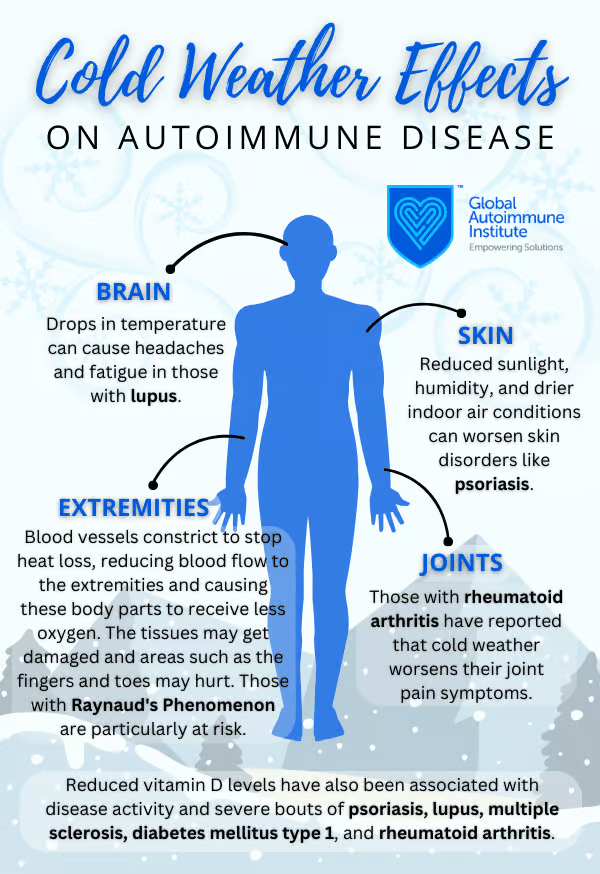
With lupus, cold temperatures activate painful flare-ups as blood vessels constrict to minimize heat loss. As this happens, pressure increases in different parts of the body, thereby reducing blood flow to the extremities. Because these body parts receive less oxygen, tissue is damaged, causing pain in areas such as the fingers and toes. Blood flow in lupus patients may already be impaired by a condition known as Raynaud’s Phenomenon, during which the body’s response to cold or stress causes abnormal spasms in the blood vessels (1). Drops in temperature can also trigger headaches and fatigue in those with lupus (2).
A connection between weather changes and arthritis has also been established. A study published in 2015 suggested that weather conditions and changes may affect joint pain in older adults with osteoarthritis (3). People living with rheumatoid arthritis have reported that cold weather worsens their symptoms while sunny, warmer weather conditions improve them (4). The activity of genes that promote inflammation associated with joint pain was also higher in the winter months in some people with rheumatoid arthritis and other conditions (5). A more recent study indicated that women with arthritis were more susceptible to extreme cold weather and at higher risk of being hospitalized due to pain (6).
Autoimmune skin disorders like psoriasis are significantly affected during the colder seasons because of reduced sunlight and humidity, as well as drier air conditions indoors. In the late winter months, reduced vitamin D levels are also known to be associated with disease activity and severe bouts of psoriasis, lupus, multiple sclerosis, diabetes mellitus type 1, and rheumatoid arthritis (7, 8, 9).

What Can You Do About Weather Changes Triggering Autoimmune Flares?
The best way to prevent and minimize autoimmune flare-ups is to prepare for cold weather. The most straightforward way is to stay as warm as possible by layering clothes, placing warmers in pockets and shoes to keep the hands and feet from getting too cold, eating frequent small meals or snacks, and staying indoors as much as possible on days of extreme cold. Most importantly, patients who are prone to flare-ups that cause severe pain and inflammation should consult their healthcare providers for advice on additional protective measures, resources on specific autoimmune conditions, as well as considerations about living in places with warmer climates.
The relationship between climate change and health is currently being studied. Although research is still in the early stages, the effects of climate events on autoimmunity are a growing concern. Recent studies have reported that the loss of biodiversity, the increase in air pollution and viral infections, and extreme weather conditions may lead to more cases of autoimmune conditions like rheumatoid arthritis, celiac disease, and multiple sclerosis (10, 11, 12).
Seasonal Affective Disorders And Autoimmune Disease
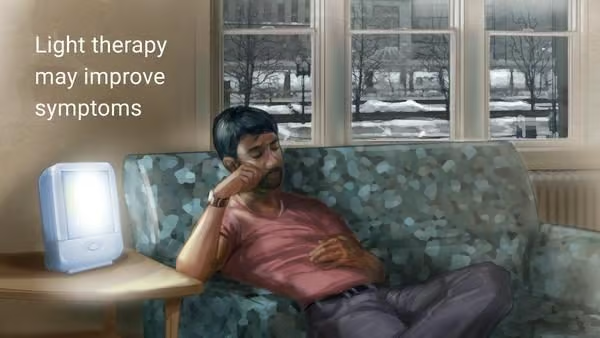
Environmental factors such as infections, low vitamin D levels, UV light, and melatonin vary with each season and greatly influence the severity of autoimmune disease symptoms. The effects can be both physical and psychological. Seasonal affective disorder is commonly observed in the colder months when days get shorter and daylight is reduced, often presenting with signs of depression, mood swings, and changes in sleep patterns and appetite. Emotional stress can make people with certain autoimmune diseases more susceptible to flares. When the symptoms of seasonal affective disorder are severe, light therapy may be recommended. However, because UV light can worsen symptoms of diseases such as lupus, patients should consult a physician to consider the possible side effects (13).
Can Cold Temperatures Be Beneficial?
A study published in Cell Metabolism in 2021 reported that low temperatures might help improve autoimmune conditions such as multiple sclerosis (14). Mice affected by this disease that were exposed to cold temperatures increased their metabolic rate to maintain body heat. Investigators speculated that exposing the body to the cold takes away the resources the immune system would typically use to attack healthy tissue. Indeed, after exposure to the cold, disease symptoms in the mice’s central nervous system appeared to be less severe. Although these results are promising, the mechanisms behind these processes and the broad implications in certain autoimmune diseases are still unknown (14).
About The Author
Damiana Chiavolini, MS, PhD is a freelance writer who specializes in medical and life science topics. As a trained researcher, she authored journal articles in the areas of infection and immunity and wrote booklets and book chapters about different diseases. As a professional communicator, she writes feature articles for magazines and other publications and produces content for higher education platforms. Damiana is also an experienced academic editor, microbiology educator, writing coach, and fragrance blogger. She is a contributing member of the American Medical Writers Association and the current president of the association’s Southwest chapter.

Sources
- Article Sources
Lupus.net: Cold Weather and Lupus: How To Be Prepared. https://lupus.net/living/cold-weather
Lupus Corner: Seasonal affective disorder, changing seasons, and lupus. https://lupuscorner.com/seasonal-affective-disorder-changing-seasons-and-lupus/
Timmermans EJ. 2014. Self-perceived weather sensitivity and joint pain in older people with osteoarthritis in six European countries: results from the European Project on OSteoArthritis (EPOSA). BMC Musculoskeletal Disorders. 15:66. https://pubmed.ncbi.nlm.nih.gov/24597710/
Savage E.M. 2015. Does rheumatoid arthritis disease activity correlate with weather conditions? Rheumatology International. 35:887-90. https://pubmed.ncbi.nlm.nih.gov/25342437/
Castro Dopico X. 2015. Widespread seasonal gene expression reveals annual differences in human immunity and physiology. Nature Communications. 6:7000. https://pubmed.ncbi.nlm.nih.gov/25965853/
Huang L.J. 2022. Temperature might increase the hospital admission risk for rheumatoid arthritis patients in Anqing, China: a time-series study. InternationalJournal of Biometeorology. 66:201-211. https://pubmed.ncbi.nlm.nih.gov/34718869/
Watad A. 2017. Seasonality and autoimmune diseases: The contribution of the four seasons to the mosaic of autoimmunity. Journal of Autoimmunity. 82:13-30. https://pubmed.ncbi.nlm.nih.gov/28624334/
Kostoglou-Athanassiou I. 2012. Vitamin D and rheumatoid arthritis. Therapeutic Advances in Endocrinology and Metabolism.3:181-187. https://pubmed.ncbi.nlm.nih.gov/23323190/
Murdaca G. 2019. Emerging role of vitamin D in autoimmune diseases: An update on evidence and therapeutic implications. Autoimmunity Reviews. 18:102350. https://pubmed.ncbi.nlm.nih.gov/31323357/
Ray C. and Ming X. 2020. Climate Change and Human Health: A Review of Allergies, Autoimmunity and the Microbiome. International Journal of Environmental Research and Public Health. 17: 4814. https://www.ncbi.nlm.nih.gov/pmc/articles/PMC7369820/
Adami G. 2020. Association between long-term exposure to air pollution and immune-mediated diseases: a population-based cohort study. RMD Open. 8:e002055. https://pubmed.ncbi.nlm.nih.gov/35292563/
Smatti. M.K. 2019. Viruses and Autoimmunity: A Review on the Potential Interaction and Molecular Mechanisms. Viruses. 11:762. https://pubmed.ncbi.nlm.nih.gov/31430946/
Lupus Foundation of America. https://www.lupus.org/resources/is-light-therapy-for-seasonal-affective-disorder-safe
Spiljar M. 2021. Cold exposure protects from neuroinflammation through immunologic reprogramming. Cell Metabolism. 33:2231-2246. https://pubmed.ncbi.nlm.nih.gov/34687652/