Beyond Genes and Smoking: 5 More Triggers That Heighten Autoimmune Disease Risk
Genetics, smoking, and comorbidities are only some of the factors that make people more susceptible to autoimmune diseases. These and other risk factors are discussed in a previously published article: 7 Risk Factors for Autoimmune Disease.
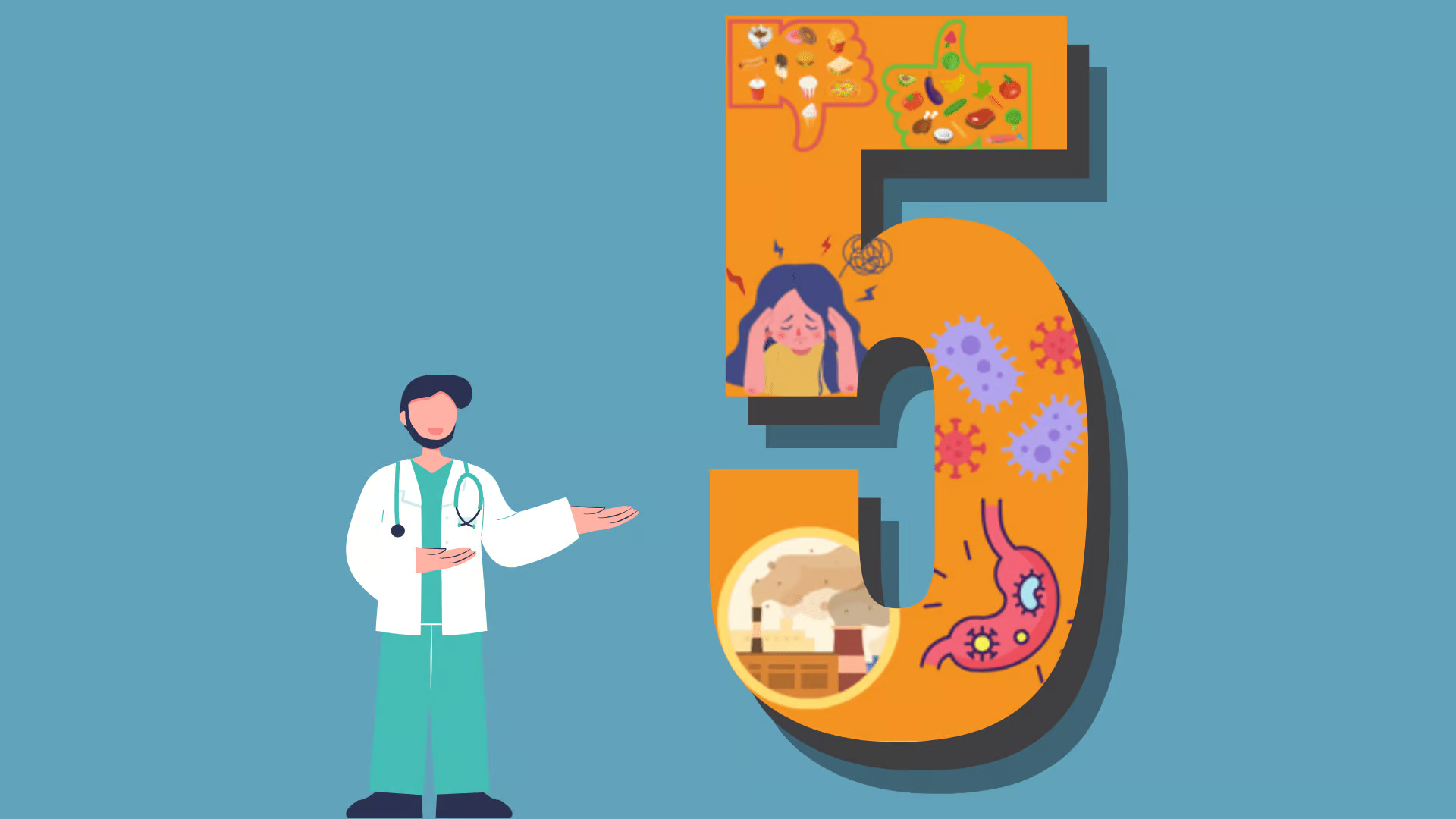
Continuing this conversation, we will look at five additional trigger categories:
Although these risk factors are discussed as defined groups, some of them closely interact to increase a person’s susceptibility to autoimmune diseases. For example, microbial imbalances in the human body can be at once influenced by diet, exposure to environmental factors, and stress in ways that scientists do not fully understand.
Let’s take a closer look.
1. Pathogens
Infections are known to trigger autoimmunity. Pathogens, defined as microorganisms that cause an infection, may lead to autoimmune disease or activate flare-ups in people who already have an autoimmune disease. Examples are viruses like SARS-CoV-2 and Epstein-Barr, and bacteria like Streptococcus, which have been previously discussed.
Other viral infections can activate immune responses that produce cross-reactive antibodies, which, in turn, may trigger an autoimmune disease. The influenza virus and HPV have been associated with multiple sclerosis, while coxsackie viruses have been associated with type 1 diabetes (1). In a similar manner, bacterial pathogens have been linked to reactive arthritis, thyroid autoimmunity, rheumatic fever, and lupus (1, 2).
Fungal infections may be involved in autoimmune diseases too. Candidiasis, caused by the Candida yeast, has been associated with an increased risk of developing multiple sclerosis (3, 4). However, despite the reported data, the causative link between the two is still unclear. A disorder known as autoimmune polyendocrinopathy-candidiasis-ectodermal dystrophy (APECED) brings together candidiasis and autoimmune disease by making people susceptible to chronic cutaneous infections by Candida, type 1 diabetes, vitiligo, and hypothyroidism (5). Nevertheless, APECED is a complex condition with multiple clinical manifestations that merits further research (6).
2. Dysbiosis and SIBO
Pathogens are not the only microorganisms that trigger autoimmune disease. Dysbiosis, an imbalance in a person’s innate microbiome, may promote the loss of beneficial microorganisms and the growth of harmful ones in the human body, causing inflammation and other processes that lead to autoimmune disease (7, 8). Dysbiosis may occur in organs and tissues such as the intestinal tract, oral cavity, and skin, and has been associated with lupus, rheumatoid arthritis, Sjogren’s syndrome, and systemic sclerosis (8).
The excessive growth of bacterial populations in the gastrointestinal system may lead to a disorder called small intestinal bacterial overgrowth (SIBO). People with SIBO may show clinical signs such as abdominal pain and chronic diarrhea (9). SIBO may influence or be linked to multiple conditions and disorders, including autoimmune diseases such as systemic sclerosis, Hashimoto’s thyroiditis, and Graves’ disease (9, 10). However, additional studies are needed to unveil the complexity of SIBO and its relationship with the gastrointestinal tract and the immune system.
3. Diet
The mechanisms that regulate dysbiosis, SIBO, and gastrointestinal health are closely related to nutrition. As an example, the combination of these factors was reported to affect thyroid autoimmunity (10). Processed meats, refined sugars, dairy products, and even food colorings and preservatives increase the risk of intestinal inflammation and tissue damage that can lead to autoimmune diseases.
Molecular mimicry, a process through which food items are mistakenly attacked as self-antigens, may be the main mechanism involved in triggering autoimmunity (7). Hashimoto’s disease and inflammatory bowel disease are examples of autoimmune diseases that may be affected by diet and, therefore, can benefit from a healthy diet. The complex relationship between diet, gut health, and genetic susceptibility and their mechanistic effects on the immune system are still poorly understood.
4. Environmental factors
A person’s exposure to environmental factors alone may not be enough to cause autoimmunity, but their interactions with genetics, health conditions, and other internal and external influences can lead to autoimmunity.
Toxins, air pollutants, and certain chemicals have been described as autoimmunity triggers. Examples include the possible association of mercury, pesticides, and trichloroethylene (a chemical used as a cleaner for metal) with lupus and type 1 diabetes (11, 12, 13), and the effects of silica (an additive in food and cosmetic items) on rheumatoid arthritis, systemic sclerosis, and, again, lupus (14).
Much of the evidence in this area comes from research conducted in laboratory animal models, such as the pristane-induced lupus model (15, 16); therefore, the causative relationship between environmental factors and autoimmune diseases in humans remains poorly understood.
5. Stress and trauma
Psychological and traumatic stress can contribute to the dysregulation of the immune system and impair the function of several immune factors, including cytokines, substances released by immune cells that affect other cells and cause inflammation (17).
A study published in the Journal of the American Medical Association found an association between post-traumatic stress disorder (PTSD) and autoimmune disease (18). Characterized by psychological, behavioral, and physical signs and symptoms, PTSD is observed in some people who have gone through a traumatic event. As explained in a review paper published in Nature, PTSD may coexist with autoimmune diseases such as rheumatoid arthritis, multiple sclerosis, and psoriasis, affecting the immune system and triggering inflammation (19). Nevertheless, the mechanisms behind the relationship between stress-related disorders and autoimmune disease remain unclear.
Reduce your risk
Although knowing about risk factors is an essential requirement for living a healthy life, exposure to any of the triggers discussed here does not necessarily mean you will develop an autoimmune disease. Talk to your doctor about ways to minimize infection, avoid exposure to potentially harmful chemicals, eat a balanced diet, and manage stress.

About the Author
Damiana Chiavolini, MS, PhD is a freelance writer who specializes in medical and life science topics. As a trained researcher, she authored journal articles in the areas of infection and immunity and wrote booklets and book chapters about different diseases. As a professional communicator, she writes feature articles for magazines and other publications and produces content for higher education platforms. Damiana is also an experienced academic editor, microbiology educator, writing coach, and fragrance blogger. She is a contributing member of the American Medical Writers Association and the immediate past-president of the association’s Southwest Chapter.

Sources
- Article Sources
Vojdani A. et al. (2022). The Role of Exposomes in the Pathophysiology of Autoimmune Diseases II: Pathogens. Pathophysiology, 29(2): 243–280. https://pubmed.ncbi.nlm.nih.gov/35736648/
Qiu C.C. et al. (2019). Triggers of Autoimmunity: The Role of Bacterial Infections in the Extracellular Exposure of Lupus Nuclear Autoantigens. Frontiers in Immunology, 10, 2608. https://pubmed.ncbi.nlm.nih.gov/31781110/
Benito-León J. et al. (2010). Association between multiple sclerosis and Candida species: evidence from a case-control study. European Journal of Clinical Microbiology & Infectious Diseases, 29(9):1139-45.https://pubmed.ncbi.nlm.nih.gov/20556470/
Pisa D. et al. (2013). Fungal infection in cerebrospinal fluid from some patients with multiple sclerosis. European Journal of Clinical Microbiology & Infectious Diseases, 32(6):795-801. https://pubmed.ncbi.nlm.nih.gov/23322279/
Eglander H. at al. (2023). Alopecia areata and occurrence of vitiligo and hypothyroidism in autoimmune polyendocrinopathy-candidiasis-ectodermal dystrophy patients. Pediatric Dermatology, 40(5):857-859.https://pubmed.ncbi.nlm.nih.gov/37495514/
Ahonen P. et al. (1990). Clinical variation of autoimmune polyendocrinopathy-candidiasis-ectodermal dystrophy (APECED) in a series of 68 patients. New England Journal of Medicine, 322(26):1829-36.https://pubmed.ncbi.nlm.nih.gov/2348835/
Vojdani A. and Vojdani E. 2021. The Role of Exposomes in the Pathophysiology of Autoimmune Diseases I: Toxic Chemicals and Food. Pathophysiology, 28(4):513-543. https://pubmed.ncbi.nlm.nih.gov/35366249/
De Luca F. & Schoenfeld Y. (2019). The microbiome in autoimmune diseases. Clinical and Experimental Immunology, 195(1):74-85. https://pubmed.ncbi.nlm.nih.gov/29920643/
Sroka N. et al. (2022). Show Me What You Have Inside-The Complex Interplay between SIBO and Multiple Medical Conditions-A Systematic Review. Nutrients, 15(1):90. https://pubmed.ncbi.nlm.nih.gov/36615748/
Ruscio M. et al. (2022). The Relationship between Gastrointestinal Health, Micronutrient Concentrations, and Autoimmunity: A Focus on the Thyroid. Nutrients, 14(17):3572. https://pubmed.ncbi.nlm.nih.gov/36079838/
Crowe W. et al. (2017) Mercury as an environmental stimulus in the development of autoimmunity – A systematic review. Autoimmunity reviews, 16(1):72-80. https://pubmed.ncbi.nlm.nih.gov/27666813/
Simoniello M.F. et al. (2017). Different end-points to assess effects in systemic lupus erythematosus patients exposed to pesticide mixtures. Toxicology, 376:23-29. https://pubmed.ncbi.nlm.nih.gov/27497885/
Abela G.A & Fava S. (2021). Why is the Incidence of Type 1 Diabetes Increasing? Current Diabetes Reviews, 17(8):e030521193110. https://pubmed.ncbi.nlm.nih.gov/33949935/
Pollard K.M. (2016). Silica, Silicosis, and Autoimmunity. Frontiers in Immunology, 11:7:97.https://pubmed.ncbi.nlm.nih.gov/27014276/
Calvani N. et al. (2005). Induction of apoptosis by the hydrocarbon oil pristane: implications for pristane-induced lupus. Journal of Immunology, 175(7):4777-82. https://pubmed.ncbi.nlm.nih.gov/16177126/
Reeves W.H. et al. (2009). Induction of autoimmunity by pristane and other naturally occurring hydrocarbons. Trends in Immunology, 30(9):455-64. https://pubmed.ncbi.nlm.nih.gov/19699150/
Stojanovich L. & Marisavljevich D. (2008). Stress as a trigger of autoimmune disease. Autoimmunity Reviews, 7(3):209-13. https://pubmed.ncbi.nlm.nih.gov/18190880/
Song H. et al. (2018). Association of Stress-Related Disorders With Subsequent Autoimmune Disease. Journal of the American Medical Association, 19(23):2388-2400. https://pubmed.ncbi.nlm.nih.gov/29922828/
Katrinli S. et al. (2022). The role of the immune system in posttraumatic stress disorder. Translational Psychiatry, 4;12(1):313. https://pubmed.ncbi.nlm.nih.gov/35927237/