The Relationship Between Autoimmune Disease and the Gut Microbiome

The Mysterious Microbiome
As researchers continue to look for environmental factors that cause autoimmune disease, many are turning the lens towards the human body itself, and to vast networks of microbial communities that dwell in and on it.
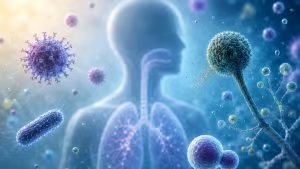
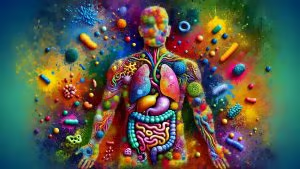
Humans are host to an array of microscopic life. At several trillion strong, microbial communities consisting of bacteria, fungi, protozoa, and viruses occupy numerous parts of the body. Their genetic material is collectively known as the microbiome. These microbes may be up to two times more prevalent than human cells, and each person’s microbiome could weigh as much as 5 pounds (1, 2).
Microbial colonies support human health in a variety of ways. The gut microbiota is involved in nutrient digestion, vitamin synthesis, and several other metabolic processes. It also influences the development and maintenance of the immune system (2).
Some studies suggest that imbalances in the microbiome may be an activator for disease—including autoimmune conditions.
Alterations in the microbiome, broadly referred to as dysbiosis, can result from a variety of factors, including diet, toxins, pathogens, and more. Pathogens that attack the intestines are the most influential in promoting microbial dysbiosis. In animal studies, researchers have observed that foodborne viral pathogens can alter the composition of the microbiome, trigger inflammation, and contribute to the development of autoimmunity (3).
Autoimmune Disease and the Gut
Researchers have yet to determine which specific microbiota are directly involved in the regulation of inflammatory mechanisms. However, many believe that bacteria found in the mucus layer of the intestines may hold the key to understanding more about how the microbiome relates to health and disease.
While further investigation is needed, many researchers suspect that autoimmune diseases, as well as some other chronic conditions, could have their origins in the gut microbiome (2, 3). Scientists are currently studying the relationship between gut microbe health and the following autoimmune diseases:
- Lupus: The microbiomes of patients with systemic lupus erythematosus (SLE) have shown significantly decreased microbial diversity, as well as an increase in a specific species, Ruminococcus gnavus. These trends also correlated with the severity of disease activity (4).
- Inflammatory bowel disease (Crohn’s disease and Ulcerative Colitis): There is an apparent link between Crohn’s disease flare-ups and transient blooms of Ruminococcus gnavus. R. gnavus is a typical part of the microbiome, but it produces harmful amounts of inflammatory polysaccharides when present in abnormally high numbers (5).
- Type one diabetes: Increased permeability of the gut epithelial barrier, known as “leaky gut”, has been observed in T1D patients and is thought to be a primary feature of the disease (6). Research suggests that dysbiosis “may influence the pathogenesis of T1D by affecting immune homeostasis and/or gut permeability” (7).
- Multiple sclerosis: In studies, MS patients exhibit dysbiosis, specifically in the absence or over-prevalence of several genus and species of microbes. Among these, certain species have been implicated in an increased expression of genes that are involved in both innate and adaptive immunity (7).
- Rheumatoid arthritis: Compared to the microbiomes of healthy controls, studies indicate that several bacteria taxa are abundant in RA patients, while some others are depleted (8). Certain bacteria that are significantly enriched in the microbiomes of RA patients have been shown to induce intestinal inflammation that leads to severe arthritis in animal models (9).
Conclusion
Data strongly suggests that there is some degree of interplay between autoimmune disease and gut microbiome health. However, more research is necessary to determine whether abnormalities in the gut microbiome are a cause of autoimmune disease, an effect, or both (6, 7).
As scientists continue to investigate this complex relationship, many are hopeful that studies of the microbiome could one day give way to improvements in diagnostics and therapies- and possibly even in the prevention of some autoimmune diseases.
For more about the microbiome, check out our previous article, What Is the Microbiome?

Sources
- Article Sources
Abbott, A. (2016). Scientists Bust Myth That Our Bodies Have More Bacteria Than Human Cells. Nature.
Hair, M., Sharpe, J. (2014). Fast Facts About the Human Microbiome. The Center for Ecogenetics and Environmental Health, University of Washington.
Xu, Huihui, et al. (2019). The Dynamic Interplay between the Gut Microbiota and Autoimmune Diseases. National Center for Biotechnology Information, U.S. National Library of Medicine, 2019, 7546047. https://doi.org/10.1155/2019/7546047
Carding, S., et al. (2015). Dysbiosis of the Gut Microbiota in Disease. National Center for Biotechnology Information, U.S. National Library of Medicine.
Hofheinz, E. (2019). To Understand Lupus, Study the Gut. The Rheumatologist.
Henke, M. T., et al. (2019). Ruminococcus gnavus, a Member of the Human Gut Microbiome Associated with Crohn’s Disease, Produces an Inflammatory Polysaccharide. Proceedings of the National Academy of Sciences of the United States of America.
Zhou, H., et al. (2020). Evaluating the Causal Role of Gut Microbiota in Type 1 Diabetes and Its Possible Pathogenic Mechanisms. Frontiers in Endocrinology.
Jangi, S., et al. (2016). Alterations of the Human Gut Microbiome in Multiple Sclerosis. Nature.
Wu, X. et al. (2017). Alterations of the Gut Microbiome in Rheumatoid Arthritis. Osteoarthritis and Cartilage.
Manasson, J., Blank, R. B., Scher, J. U. (2020). The Microbiome in Rheumatology: Where are We and Where Should We Go?. BMJ Journals.