What is the Microbiome and Why is it Important?
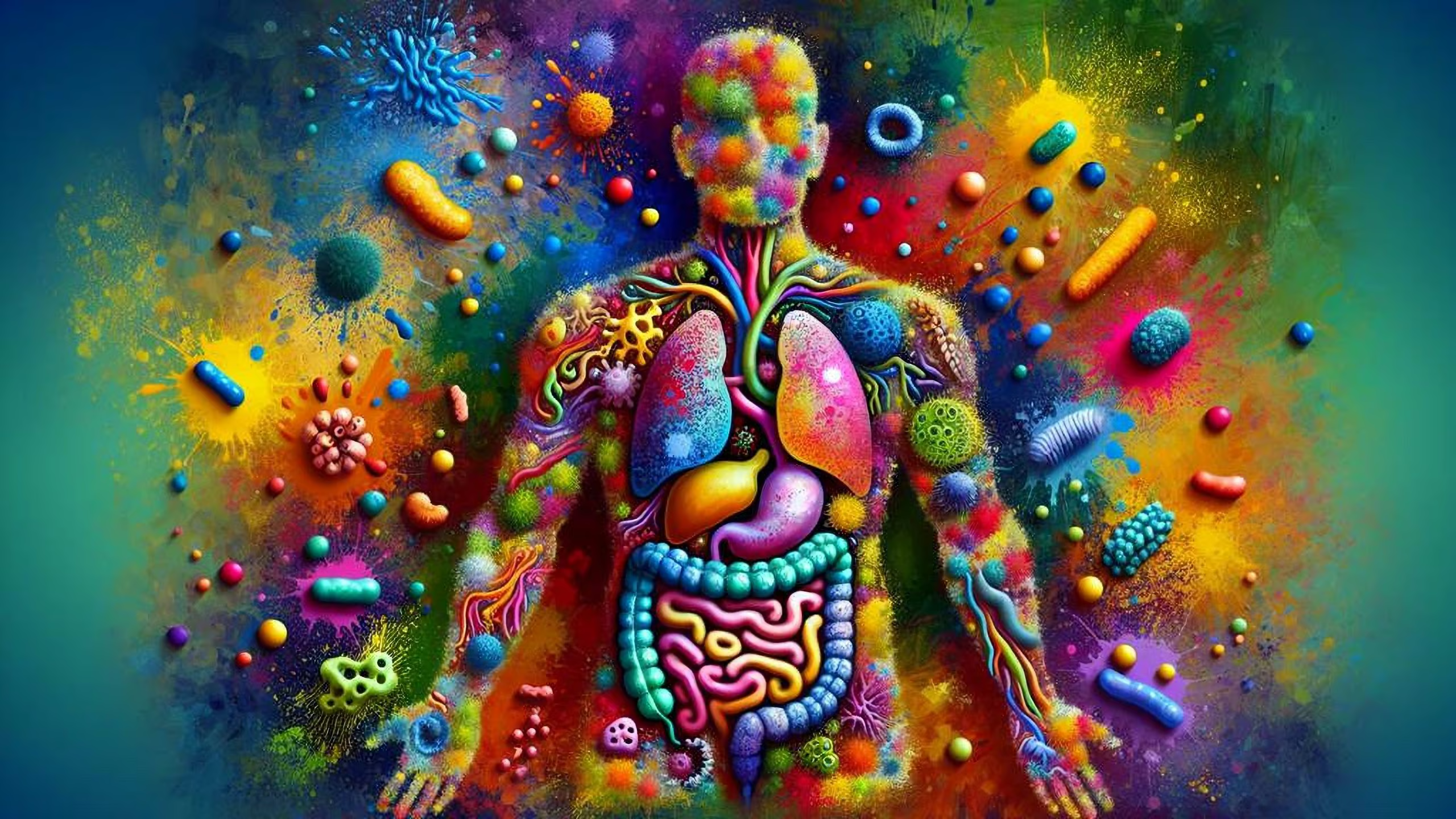
Our bodies are teeming with single-celled organisms called microbes, which include bacteria, archaea, fungi, viruses, and others. In fact, the number of microscopic inhabitants is roughly equivalent to the number of our own human cells. There are distinct, diverse microbial communities – or microbiomes – found in various parts of the body, including the skin, mouth, lungs, and the gastrointestinal tract, commonly referred to as the gut.
The Microbiome and Autoimmune Disease
Just as we provide these microorganisms with a warm, comfortable environment and plenty to eat, their presence plays a critical role in our health. The microbiome helps us digest food and extract nutrients, carry out metabolic processes, and work in tandem with the immune system to protect the body against infectious agents.
When this delicate ecosystem becomes imbalanced, the effects can be serious, influencing digestion, metabolism, and immune regulation.
Many chronic illnesses, including obesity, type 2 diabetes, and inflammatory bowel disease, appear to be affected by the microbiome.
The relationship between autoimmunity and the microbiome is still being studied intensely, but these conditions are likely associated with an imbalance in the gut microbiome.

Although strong evidence is still emerging, studies suggest that autoimmune patients exhibit reduced microbial diversity. In Crohn’s disease, for example, one study found that the beneficial bacteria Faecalibacterium prausnitzii, normally present in healthy individuals, were missing in those with Crohn’s. Similar findings have been reported in ulcerative colitis. While these studies don’t prove a direct cause-and-effect relationship, they highlight an important area for further investigation.
Research on the Human Microbiome
To better understand the microbiome, scientists are characterizing the composition and function of these microbial communities. A major effort, the Human Microbiome Project (HMP) led by the NIH, has gathered extensive data on microbes in the gastrointestinal tract, nasal passages, oral cavities, skin, and urogenital tract.
This work, along with similar research, continues to reveal the significant influence of the microbiome on disease, immunity, and overall human health.
Microbiome Facts
- Our gut microbiome interacts with the microbiomes of our organs, including the brain
- The functions and interactions of the microbiome differ according to the species and strains of bacteria, fungi, and viruses, their quantity, their proximity to each other, and even their location in the gut
- Our microbiomes change in reaction to the food we eat, the time of day, and any medications we take – most importantly antibiotics
- It is believed that being born via cesarean section adversely affects our microbiomes, as they start developing at birth (and most likely even in utero)
- When our microbiomes are unhealthy, we are vulnerable to allergies, infectious and autoimmune diseases, as well as neurological damage, which can cause anxiety, depression, anxiety, OCD, and movement and cognitive disorders
Trending Topics In Research
- Effect of antibiotics on the microbiome
- Impact of cesarean section birth on the microbiome and disease development
- Use of probiotics to improve digestive conditions
- Influence of the microbiome on gastrointestinal disorders such as IBS (irritable bowel syndrome), IBD (inflammatory bowel disease), Crohn’s, and ulcerative colitis
- Role of the environment on the microbiome’s composition

Sources
- Article Sources
Rose, N. R., & Mackay, I. R. (2014). The Microbiome and Autoimmunity. The Autoimmune Diseases (5th ed., pp 329-338). Oxford, UK: Elsevier Academic Press.
The Body’s Ecosystem (2014, August 1). The Scientist.
Sender, R., Fuchs, S., & Milo, R. (2016). Revised Estimates for the Number of Human and Bacteria Cells in the Body. PLoS biology, 14(8), e1002533. https://doi.org/10.1371/journal.pbio.1002533
Institute for Genome Sciences, University of Maryland School of Medicine. About the Human Microbiome.
Baylor College of Medicine. The Human Microbiome Project.
Lloyd-Price J, Mahurkar A, Rahnavard G, Crabtree J, Orvis J, Hall AB, Brady A, Creasy HH, McCracken C, Giglio MG, McDonald D, Franzosa EA, Knight R, White O, Huttenhower C. (2017) Strains, functions and dynamics in the expanded Human Microbiome Project. Nature, 550:61–66. doi:10.1038/nature23889.
Devaraj, S., Hemarajata, P., & Versalovic, J. (2013). The Human Gut Microbiome and Body Metabolism: Implications for Obesity and Diabetes. Clinical chemistry, 59(4), 617–628. https://doi.org/10.1373/clinchem.2012.187617
Opazo, M. C., Ortega-Rocha, E. M., Coronado-Arrázola, I., Bonifaz, L. C., Boudin, H., Neunlist, M., … Riedel, C. A. (2018). Intestinal Microbiota Influences Non-intestinal Related Autoimmune Diseases. Frontiers in microbiology, 9, 432. https://doi.org/10.3389/fmicb.2018.00432