Is Long COVID an Autoimmune Disease? Is SARS-CoV-2 an Autoimmune Virus?

A comparative look at the overlap between COVID-19 infection and autoimmunity, and the science behind it
A lack of diagnosing and misdiagnosing makes it nearly impossible to calculate a true estimate for how many people live with an autoimmune disease (AD). As AD cases continue to be on the rise, there is an even more apparent need to promote research and awareness on behalf of this sizable population (1). The recent influx of scientific evidence around COVID-19 is showing a more direct correlation between the two.
As the similarities between the symptoms and mechanisms of long-term SARS-CoV-2 infection (or long covid) and autoimmune disease became more apparent, researchers started calling the COVID-19-causing virus the “autoimmune virus.” This article breaks down some of the groundbreaking research corroborating this discovery into the following categories:
- Presence of autoantibodies
- Hyperferritinemia and cytokine storms
- Molecular mimicry
- HLA gene polymorphism
While the following information is by no means exhaustive, it can serve as a summary of key developments around the SARS-CoV-2 virus, long COVID, and autoimmune disease. For the most up-to-date information regarding COVID research and news as it pertains to autoimmune disease, check out our timeline.
Autoantibodies Activating Autoimmunity
The current understanding surrounding autoantibodies is that they play a role in activating the immune response and induce cellular damage and inflammation (2). However, these findings have not been studied in all autoimmune diseases. The pathogenicity (ability to be disease-causing) of autoantibodies in mouse models with a lupus-like disease is the most thoroughly studied as of now (3).

Comparing the presence of autoantibodies in autoimmune disease and COVID-19 infection.
Hyperferritinemia & Cytokine Storms
Hyperferritinemia is when there are unusually large amounts of ferritin in the blood. Ferritin is a protein that’s primary function appears to be the storage of iron and the concentrating of cellular iron to protect cells from its toxic effects (6). It has recently emerged as an important molecule in the immune system response and, when present at normal levels, helps to coordinate the battle against hyper-inflammation.
At higher levels, hyperferritinemia has been shown to lead to disease states by “mechanisms of inflammation, infection, injury, and repair” (7). The production of ferritin is regulated by cytokines. Cytokines respond to infection in part by expressing ferritin genes and when cytokines are being overproduced by macrophages (“cytokine storm“) it has been shown to enhance the inflammatory process and trigger an unusually large amount of ferritin in the blood (8). It is suspected that the active ferritin production by macrophages and cytokines following COVID-19 infection might promote the production of several pro-inflammatory and anti-inflammatory cytokines (9).

Comparing hyperferritinemia and cytokine storms in autoimmune disease and COVID-19 infection.
Sources for graphic: (5, 7, 10, 11, 12, 13, 14, 15, 16)
Malicious Molecular Mimicry
Molecular Mimicry has been drawing extra attention lately, as it is thought to be a possible mechanism of the autoimmune phenomena in COVID-19. Studies have shown that there is a homology (state of having the same or similar relation, relative position, or structure) of primary sequence between humans and components of SARS-CoV-2 (17). This is interesting in that the same structural similarity is not found in mammals unaffected by the virus, indicating that the virus is specifically adapting to imitate human biology.

Comparing molecular mimicry in autoimmune disease and COVID-19 infection.
Sources for graphic: (18 , 19 , 20 , 21)
Polymorphism Predicting Pathogenicity
It should come as no surprise that there are significant genetic sequence variations when comparing individuals’ DNA. These differences in the DNA sequence are called polymorphisms when they occur in ≥1% of the population. These polymorphisms can present silently (meaning they have not been found to alter the function or expression of a gene) or visibly.
Polymorphisms can occur in any region of the genome, but the genes coding for the major histocompatibility complex (MHC), which in turn code the human leukocyte antigens (HLA) genes, have been found to contain the most polymorphic genes. This is relevant for the study of autoimmunity because these MHC molecules are involved in the immune system and interact with T-cells. (22)
What do these polymorphisms have to do with COVID-19? Well, one of the biggest questions remaining is why some people have severe and potentially life-threatening responses to SARS-CoV-2 infection while others experience little to none. Another aspect of that question is why some individuals are developing autoimmune disease-related issues long after they’ve tested negative for COVID-19 and others are not. These differences have been found between individual patients as well as different populations. This discovery has led to the hypothesis that the differences in HLA genes might be influencing this variation through gene polymorphisms that involve one of two or more variants of a particular DNA sequence.
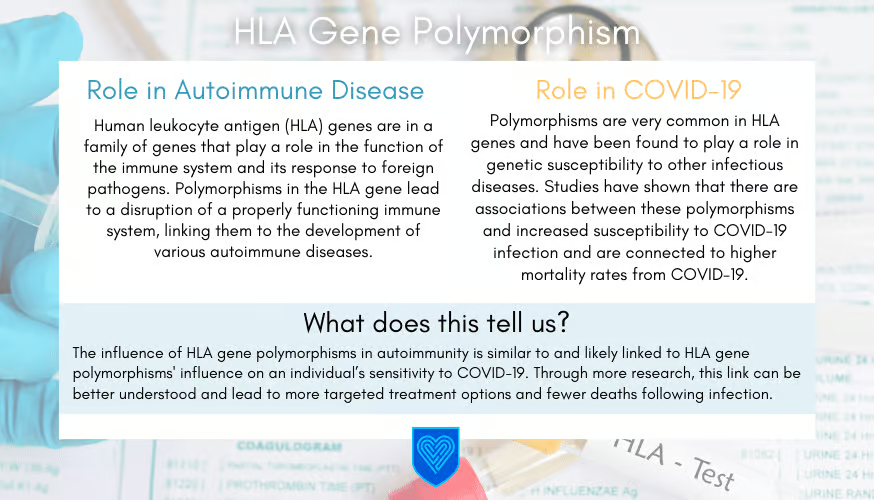
Comparing HLA gene polymorphism in autoimmune disease and COVID-19 infection.
Sources for graphic: (23 , 24 , 25 , 26)
Further Associations Between Covid-19 and Autoimmunity
The loss of smell has been a prevalent symptom experienced with COVID-19 infection. Olfactory dysfunction has been linked to several autoimmune diseases as well, including multiple sclerosis, lupus, and myasthenia gravis (28). While experts are not surprised by this connection, more research is required to bolster associations such as this one. The development of autoimmune diseases secondary to COVID-19 infection (29–35), bystander immunity activation (14), and neutrophil extracellular traps (NET) activation and release (36), are some examples of more associations that, with stronger data and research, would show more robust connection to shed light on both autoimmune disease and COVID-19.

Sources
- Article Sources
Dinse GE, Parks CG, Weinberg CR, Co CA, Wilkerson J, Zeldin DC, Chan EKL, Miller FW. 2020. Increasing prevalence of antinuclear antibodies in the United States. Arthritis Rheum; doi: 10.1002/art.41214 [Online 8 April 2020].
Suurmond, J., & Diamond, B. (2015). Autoantibodies in systemic autoimmune diseases: specificity and pathogenicity. The Journal of Clinical Investigation, 125(6), 2194-2202.
Richard, M. L., & Gilkeson, G. (2018). Mouse models of lupus: what they tell us and what they don’t. Lupus Science & Medicine, 5(1), e000199. https://doi.org/10.1136/lupus-2016-000199
Leslie, D., Lipsky, P., & Notkins, A. L. (2001). Autoantibodies as predictors of disease. The Journal of Clinical Investigation, 108(10), 1417–1422.
Ruan, Q., Yang, K., Wang, W., Jiang, L., & Song, J. (2020). Clinical predictors of mortality due to COVID-19 based on an analysis of data of 150 patients from Wuhan, China. Intensive Care Medicine, 46(5), 846–848.
Winzerling, J.J., and D.Q.D. Pham. “Ferritin.” Reference Module in Life Sciences, Elsevier, 2017, pp. 341–356.
Zandman-Goddard, G., & Shoenfeld, Y. (2008). Hyperferritinemia in autoimmunity. The Israel Medical Association Journal, 10, 83-84.
Rosário, C., Zandman-Goddard, G., Meyron-Holtz, E.G., D’Cruz, D.P., & Shoenfeld, Y. (2013). The Hyperferritinemic Syndrome: macrophage activation syndrome, Still’s disease, septic shock and catastrophic antiphospholipid syndrome. BMC Med 11, 185.
Gómez-Pastora, J., Weigand, M., Kim, J., Wu, X., Strayer, J., Palmer, A. F., Zborowski, M., Yazer, M., & Chalmers, J. J. (2020). Hyperferritinemia in critically ill COVID-19 patients – Is ferritin the product of inflammation or a pathogenic mediator? Clinica Chimica Acta; International Journal of Clinical Chemistry, 509, 249–251.
Lim, M. K., Lee, C. K., Ju, Y. S., Cho, Y. S., Lee, M. S., Yoo, B., & Moon, H. B. (2001). Serum ferritin as a serologic marker of activity in systemic lupus erythematosus. Rheumatology International, 20(3), 89–93.
Beyan, E., Beyan, C., Demirezer, A., Ertuğrul, E., & Uzuner, A. (2003). The relationship between serum ferritin levels and disease activity in systemic lupus erythematosus. Scandinavian Journal of Rheumatology, 32(4), 225–228.
Dahan, S., Segal, G., Katz, I., Hellou, T., Tietel, M., Bryk, G., Amital, H., Shoenfeld, Y., & Dagan, A. (2020). Ferritin as a Marker of Severity in COVID-19 Patients: A Fatal Correlation. The Israel Medical Association Journal: IMAJ, 22(8), 494–500.
Lalueza, A., Ayuso, B., Arrieta, E., Trujillo, H., Folgueira, D., Cueto, C., Serrano, A., Laureiro, J., Arévalo-Cañas, C., Castillo, C., Díaz-Pedroche, C., Lumbreras, C., & INFLUDOC group (2020). Elevation of serum ferritin levels for predicting a poor outcome in hospitalized patients with influenza infection. Clinical Microbiology and Infection : The Official Publication of the European Society of Clinical Microbiology and Infectious Diseases, 26(11), 1557.e9–1557.e15.
Rodríguez, Y., Novelli, L., Rojas, M., De Santis, M., Acosta-Ampudia, Y., Monsalve, D. M., Ramírez-Santana, C., Costanzo, A., Ridgway, W. M., Ansari, A. A., Gershwin, M. E., Selmi, C., & Anaya, J. M. (2020). Autoinflammatory and autoimmune conditions at the crossroad of COVID-19. Journal of autoimmunity, 114, 102506.
Ragab, D., Salah Eldin, H., Taeimah, M., Khattab, R., & Salem, R. (2020). The COVID-19 Cytokine Storm; What We Know So Far. Frontiers in Immunology, 11, 1446.
Dotan, A., Muller, S., Kanduc, D., David, P., Halpert, G., & Shoenfeld, Y. (2021). The SARS-CoV-2 as an instrumental trigger of autoimmunity. Autoimmunity Reviews, 102792. Advance online publication.
Kanduc, D., Shoenfeld, Y. (2020). Molecular mimicry between SARS-CoV-2 spike glycoprotein and mammalian proteomes: implications for the vaccine. Immunologic Research, 68, 310–313.
Cusick, M.F., Libbey, J.E., & Fujinami, R.S. (2012). Molecular mimicry as a mechanism of autoimmune disease.Clinic Rev Allerg Immunol., 42(1), 102-111.
Blank, M., Barzilai, O., & Shoenfeld, Y. (2007). Molecular mimicry and auto-immunity. Clinical Reviews in Allergy & Immunology, 32(1), 111–118.
Kanduc, D., & Shoenfeld, Y. (2019). Human papillomavirus epitope mimicry and autoimmunity: the molecular truth of peptide sharing. Pathobiology, 86, 285-295.
Segal, Y., Shoenfeld, Y. (2018). Vaccine-induced autoimmunity: the role of molecular mimicry and immune crossreaction. Cell Mol Immunol, 15,586–594.
“Chapter 3 – DNA Genetic Testing.” Molecular Medicine: Genomics to Personalized Healthcare, by R. J. Trent, Academic, 2012, pp. 81–115.
Choo S. Y. (2007). The HLA system: genetics, immunology, clinical testing, and clinical implications. Yonsei Medical Journal, 48(1), 11–23. https://doi.org/10.3349/ymj.2007.48.1.11
Novelli, Antonio, et al. “HLA Allele Frequencies and Susceptibility to COVID ‐19 in a Group of 99 Italian Patients.” HLA, vol. 96, no. 5, 2020, pp. 610–614., doi:10.1111/tan.14047.
Tomita, Yusuke, et al. “Association between HLA Gene Polymorphisms and Mortality of COVID‐19: An in Silico Analysis.” Immunity, Inflammation and Disease, vol. 8, no. 4, 2020, pp. 684–694., doi:10.1002/iid3.358.
Lorente, L., et al. “HLA Genetic Polymorphisms and Prognosis of Patients with COVID-19.” Medicina Intensiva, vol. 45, no. 2, 2021, pp. 96–103., doi:10.1016/j.medin.2020.08.004.
Arango, MT., Perricone, C., Kivity, S., Cipriano, E., Ceccarelli, F., Valesini, G., & Shoenfeld, Y. (2017). HLA–DRB1 the notorious gene in the mosaic of autoimmunity. Immunologic Ressearch 65,82–98.
Kim J, Choi Y, Ahn M, Jung K, Shin T. Olfactory Dysfunction in Autoimmune Central Nervous System Neuroinflammation. Molecular Neurobiology. 2018 Nov;55(11):8499-8508. doi: 10.1007/s12035-018-1001-4. Epub 2018 Mar 20. PMID: 29557516.
Bonometti, R., Sacchi, M. C., Stobbione, P., Lauritano, E. C., Tamiazzo, S., Marchegiani, A., Novara, E., Molinaro, E., Benedetti, I., Massone, L., Bellora, A., & Boverio, R. (2020). The first case of systemic lupus erythematosus (SLE) triggered by COVID-19 infection. European Review for Medical and Pharmacological Sciences, 24(18), 9695–9697.
Jones, V.G., Mills, M., Suarez, D., Hogan, C.A., Yeh, D., Segal, J.B., Nguyen, E.L., Barsh, G.R., Maskatia, S., & Mathew R. (2020). COVID-19 and Kawasaki disease: novel virus and novel case. Hospital Pediatrics, 10(6), 537-540.
Verdoni, L., Mazza, A., Gervasoni, A., Martelli, L., Ruggeri, M., Ciuffreda, M., Bonanomi, E., & D’Antiga, L. (2020). An outbreak of severe Kawasaki-like disease at the italian epicenter of the SARS-CoV-2 epidemic: an observational cohort study. The Lancet, 395(10239), 1771-1778.
Zulfiquar, A.A., Villalba, N.L., Hassler, P., & Andrès, E. (2020). Immune thrombocytopenic purpura in a patient with COVID-19. New England Journal of Medicine, 382(43).
Manganotti, P., Pesavento, V., Buoite Stella, A. Bonzi, L., Campagnolo, E., Bellavita, G., Fabris, B., & Luzzati, R. (2020). Miller Fisher syndrome diagnosis and treatment in a patient with SARS-CoV-2. Journal of Neurovirolgy.26, 605–606.
Toscano, G., Palmerini, F., Ravaglia, S., Ruiz, L., Invernizzi, P., Cuzzoni M.G., Baldanti, F., & Postorino, P. (2020). Guillain-Barre syndrome associated with SARS-CoV-2. New England journal of medicine, 382, 2574-2576.
Sedaghat, Z., & Karimi, N. (2020). Guillain barre syndrome associated with COVID-19 infection: a case report. Journal of Clinical Neuroscience, 76, 233-235.
Klopf, Johannes, et al. “Neutrophil Extracellular Traps and Their Implications in Cardiovascular and Inflammatory Disease.” International Journal of Molecular Sciences, vol. 22, no. 2, 2021, p. 559., doi:10.3390/ijms22020559.