


Long COVID Treatment Trials: 2026 RECOVER Update
NIH RECOVER Initiative Status Report | February 2026
The NIH RECOVER-Treating Long COVID (RECOVER-TLC) initiative is advancing the first large-scale, federally coordinated clinical trials for Long COVID treatments. As of early 2026, four treatment strategies are in development, though most trials are still in protocol preparation or early recruitment phases.
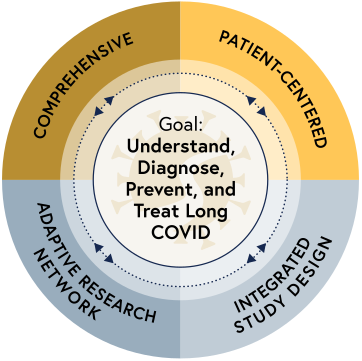
How NIH RECOVER-TLC Selects Long COVID Treatment Targets
RECOVER-TLC operates through an open submission portal managed by the Foundation for the National Institutes of Health (NIH). Nearly 600 proposed therapies, including medications, devices, and behavioral interventions, have been submitted. Proposals are reviewed by multidisciplinary working groups that include researchers, clinicians, federal agency representatives (including FDA and NIAID), and patient advocates.
Selected treatment candidates move through a structured clinical trial process:
- Protocol drafting
- Public comment period
- Protocol revision
- Institutional Review Board (IRB) approval
- Site selection and staff training
- Participant recruitment
- Data collection and analysis
This federally coordinated review structure increases transparency and scientific rigor but extends timelines before enrollment begins.
Current RECOVER-TLC Priority Targets
Baricitinib Trial for Long COVID Cognitive Symptoms
Baricitinib, a JAK inhibitor that reduces pro-inflammatory cytokine signaling, is the only RECOVER-TLC trial currently recruiting.
- 4 mg daily for 24 weeks
- Randomized, placebo-controlled
- Primary outcomes: neurocognitive and neuropsychiatric function
- Secondary outcomes: exercise capacity and quality of life
This trial tests whether immune pathway modulation can improve persistent cognitive and mood-related symptoms.
Low-Dose Naltrexone (LDN) Trial for Long COVID Pain and Fatigue
The planned LDN trial aims to enroll 1,300 participants, including children aged 6 and older.
- 16-week randomized, placebo-controlled design
- Outcomes: quality of life, pain, neurocognitive function
Pediatric inclusion was incorporated following community advocacy. LDN is hypothesized to modulate neuroinflammation through effects on microglial activation.
Semaglutide (GLP-1) Trial for Long COVID Inflammation and Metabolic Effects
Semaglutide, a GLP-1 receptor agonist, was selected in part due to extensive safety and cardiovascular data.
- Randomized, placebo-controlled
- Adults and adolescents
- Planned mechanistic components (e.g., neuroimaging, wearable data)
This trial reflects growing interest in metabolic and inflammatory pathways in Long COVID.
Stellate Ganglion Block Trial for Long COVID Dysautonomia
RECOVER-TLC is also advancing a Phase 2 randomized sham-controlled trial of stellate ganglion block (SGB), a procedure targeting sympathetic nervous system overactivity.
- Four staged injections
- Initially enrolling adults
- Focus: autonomic dysfunction and dysautonomia symptoms
This represents a procedural, non-drug approach to Long COVID treatment.
Why Long COVID Treatment Approval Will Take Time
Only one RECOVER-TLC trial is actively recruiting. Others remain in protocol development or pre-enrollment phases.
Even after enrollment begins, clinical trials require extended follow-up, data analysis, and regulatory review. Because Long COVID does not affect everyone in the same way, RECOVER’s strategy involves testing multiple therapeutic pathways rather than pursuing a single universal treatment.
Watch the Full Webinar
On January 23, 2026, NIH’s RECOVER-TLC program hosted a public webinar outlining progress on immune-targeted long COVID treatment trials, including updates on baricitinib (a JAK inhibitor), low-dose naltrexone, GLP-1 receptor agonists, and stellate ganglion block. The presentation also reviewed how therapeutic proposals are evaluated and how patient input shapes protocol design.
Citations
National Institutes of Health. (2026, February 4). 5 years in, RECOVER continues to advance its patient-centered mission. RECOVER Initiative. https://recovercovid.org/news/5-years-recover-continues-advance-its-patient-centered-mission
National Institutes of Health (2026, January 13). A year of discovery: Looking back at 2025 and ahead to 2026. RECOVER Initiative. https://recovercovid.org/news/year-discovery-looking-back-2025-and-ahead-2026
National Institutes of Health. RECOVER Clinical Trials. RECOVER Initiative. https://trials.recovercovid.org/
Foundation for the National Institutes of Health (2026, January 23). RECOVER TLC Webinar – January 2026