
COVID Infection May Trigger Chronic Fatigue Syndrome
A major new study confirms that SARS-CoV-2 infection significantly increases the risk of developing new-onset chronic fatigue syndrome/myalgic encephalomyelitis (CFS/ME), a complex and often disabling condition.
Researchers analyzed data from over 147,000 adults in the Montefiore Health System and found elevated risk for CFS/ME up to four years post-infection, regardless of whether the patient had been hospitalized for COVID-19.
Key findings include:
- COVID-19 infection increased the risk of CFS/ME by 46%–56%.
- Women were 54% more likely to develop CFS/ME than men.
- People with existing autoimmune disease had a 57% higher risk of developing CFS/ME than those without.
- Pre-existing anxiety also raised the risk of CFS/ME by 35%.
- CFS/ME risk was not elevated by SARS-CoV-2 reinfection.
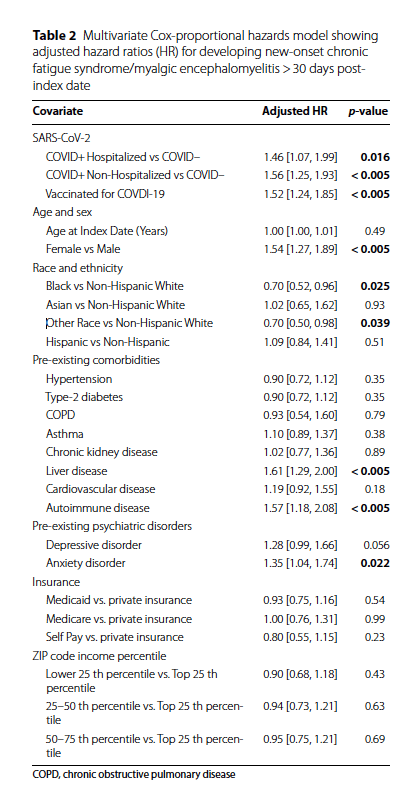
Reproduced from Hadidchi et al., 2025.
While the exact mechanisms remain unclear, this study strengthens the link between viral infections and long-term autoimmune-like syndromes. The overlap between long COVID and CFS/ME, including fatigue, brain fog, and post-exertional malaise, underscores the urgent need for better recognition and care.
Citation
Hadidchi, R., Patel, B., Madan, J. et al. Elevated risk of new-onset chronic fatigue syndrome/myalgic encephalomyelitis up to four years after SARS-CoV-2 infection. J Transl Med 23, 815 (2025). https://doi.org/10.1186/s12967-025-06625-w