
Eric Topol on Immune Aging and the Future of Disease Prevention
On September 15, 2026, physician-scientist Eric Topol, MD, delivered the keynote lecture, “Super Agers and the Immune System,” at LEAD Day 2026, held at the Scripps Seaside Forum in La Jolla, California. Hosted by La Jolla Institute for Immunology (LJI) in partnership with the Global Autoimmune Institute (GAI), the event brought together researchers and supporters to discuss advances in immunology and autoimmune disease research.
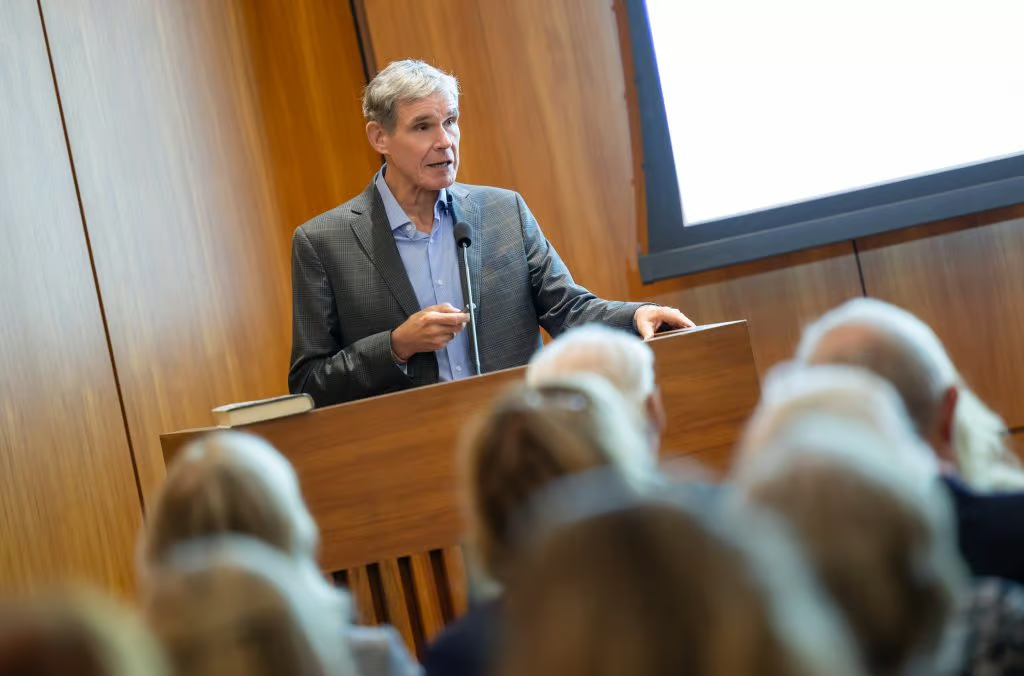
Topol explored why some people remain remarkably healthy into their nineties and beyond, while others develop multiple chronic conditions decades earlier. Drawing on research into exceptionally healthy older adults, he examined how immune aging, chronic inflammation, and emerging technologies may reshape the prevention of cardiovascular disease, cancer, and neurodegenerative conditions.
The Immune System’s Role in Healthy Aging
Topol began by distinguishing between lifespan, the total number of years a person lives, and healthspan, the years lived without significant chronic disease. In the United States, the average healthspan is approximately 64 years, compared with a lifespan of about 79 years, leaving an estimated 15-year period during which many people experience age-related illness.
He contrasted two groups of older adults: the “wellderly,” individuals who maintain exceptional health well into old age, and the “illderly,” those who develop one or more chronic diseases as they age. While most older adults experience multiple chronic conditions, some people remain remarkably healthy into their nineties and beyond.
A study led by Topol and colleagues examined the genetics of healthy aging in a cohort of more than 1,300 adults aged 80 and older, including whole-genome sequencing of 600 participants. Published in Cell in 2016, the research found that healthy aging was associated with reduced genetic susceptibility to Alzheimer’s disease and coronary artery disease, suggesting that remaining healthy into old age may involve genetic factors distinct from those associated with exceptional longevity.
This raises an important question: Why do some people maintain their health for decades longer than others?
One potential explanation involves the immune system. As people age, immune function undergoes changes collectively known as immunosenescence, including declining T-cell diversity and reduced responses to new threats. Aging is also associated with inflammaging, a state of persistent, low-grade inflammation that may contribute to cardiovascular disease, cancer, and neurodegeneration.
Research on centenarians and supercentenarians has identified unusual immune characteristics, including preserved immune-cell function and better regulation of inflammation. Studies of people who have lived beyond 110 have found distinctive populations of cytotoxic CD4 T cells, suggesting that some exceptionally long-lived individuals maintain immune capabilities that differ from those of the general aging population.
Together, these findings support growing interest in whether maintaining immune resilience could help extend healthspan.
The Thymus and New Ways to Measure Biological Aging
One emerging area of research involves the thymus, an organ responsible for T-cell maturation that typically shrinks with age.
Recent studies have used artificial intelligence to evaluate thymic health from routine chest CT scans. Research published in Nature in 2026 found that higher AI-derived thymic health scores were associated with approximately 50% lower all-cause mortality, 63% lower cardiovascular mortality, and 36% lower lung cancer incidence in reported comparisons.
These findings are observational and do not establish that improving thymic health would produce equivalent reductions in disease risk. Nevertheless, they suggest that the thymus may remain important to immune function and long-term health well into adulthood.
Topol also discussed advances in biological aging clocks, which estimate how different organs and cell types are aging based on molecular measurements.
Unlike chronological age, these tools may reveal that the brain, immune system, heart, and other organs age at different rates within the same individual. Research involving over 44,000 UK Biobank participants has identified associations between organ-specific aging patterns and long-term health outcomes. More recent work has extended this approach to individual cell types, including immune cells and brain-associated cells.
Topol emphasized that aging patterns involving the brain and immune system appear particularly informative about survival and disease risk.
AI, the Immunome, and Predicting Disease Before It Develops
Another major theme was the potential to combine detailed immune profiling with artificial intelligence to better understand individual disease risk.
The immunome encompasses the complex network of immune cells, proteins, receptors, and molecular signals that collectively determine immune function. Efforts such as the Human Immunome Project aim to characterize these components over time, including how the immune system responds to challenges such as vaccination.
Combining immunome data with genomics, proteomics, medical records, imaging, and lifestyle information could eventually provide a more complete picture of an individual’s health.
Topol highlighted Delphi-2M, an AI model described in Nature in 2025 that was developed using health information from approximately 400,000 UK Biobank participants and evaluated using data from 1.9 million people in Denmark. The model estimates the probability and potential timing of more than 1,200 diseases.
Although such predictions remain probabilistic and require further validation, Topol envisioned increasingly sophisticated systems that could identify disease risks years in advance and help researchers evaluate how interventions might change those trajectories.
For autoimmune disease research, these approaches could eventually improve the identification of immune abnormalities that precede symptoms and support more individualized strategies for prevention and treatment.
Alzheimer’s Disease and the Connection Between Brain and Immune Aging
Topol devoted considerable attention to Alzheimer’s disease, emphasizing the growing evidence that immune dysfunction and neuroinflammation may contribute to neurodegeneration.
Alzheimer’s-related biological changes may begin 15 to 20 years before cognitive symptoms emerge, creating a potentially important window for early detection and intervention.
One promising biomarker is phosphorylated tau 217 (p-tau217), a protein measurable in blood that is associated with Alzheimer’s pathology. Recent studies suggest that changes in p-tau217 may help estimate the likelihood and timing of future cognitive impairment, particularly when combined with genetic and other risk information.
Topol also highlighted emerging research into the role of immune cells in the aging brain.
Studies published in 2026 found that bone marrow-derived immune cells can enter the brain and contribute to its population of microglia, while other research identified age-related changes in the hippocampus associated with increased inflammatory activity. Additional findings suggest that changes in gene regulation within microglia may promote inflammation and cellular senescence, potentially contributing to neurodegeneration.
Research into the relationship between immune function and brain health has also raised questions about whether vaccination might influence dementia risk.
Population studies in Wales, Australia, Canada, and the United States have reported associations between shingles vaccination and lower rates of dementia diagnoses. Although these findings do not establish that vaccination prevents Alzheimer’s disease, they suggest a potential connection between immune responses and neurological health that warrants further investigation.
Topol mentioned the Wellderly Brain trial, a randomized study designed to evaluate whether intensive lifestyle interventions can influence Alzheimer’s-related biomarkers in people at elevated risk. The study plans to enroll approximately 1,200 adults aged 60 and older and assess changes in measures including p-tau217 and biological aging clocks.
Together, these advances suggest a future in which immune profiling, biological aging clocks, and AI-based prediction could help identify disease risks earlier and guide more personalized preventive strategies. Topol’s lecture underscored the importance of understanding immune aging not only for extending healthspan, but also for advancing research into autoimmune disease, cancer, and other conditions involving immune dysfunction.
References
- Erikson, G. A., Bodian, D. L., Rueda, M., Molparia, B., Scott, E. R., Scott-Van Zeeland, A. A., Topol, S. E., Wineinger, N. E., Niederhuber, J. E., Topol, E. J., & Torkamani, A. (2016). Whole-Genome Sequencing of a Healthy Aging Cohort. Cell, 165(4), 1002–1011. https://doi.org/10.1016/j.cell.2016.03.022
- Hashimoto, K., Kojima-Ishiyama, M., Inokuchi, H., Tagami, M., Sasaki, T., Mizuguchi, K., Okazaki, Y., Taniuchi, I., Ishigaki, K., Hirose, N., Carninci, P., & Arai, Y. (2026). CD4 CTLs in supercentenarians: Signs of adaptive expansion in healthy aging. Cell reports, 45(9), 117728. https://doi.org/10.1016/j.celrep.2026.117728
- Bernatz, S., Prudente, V., Pai, S., Attermann, A. K., Cao, Y., Chen, J., Lyass, A., Foldyna, B., Nürnberg, L., Bressem, K., Abbosh, C., Swanton, C., Jamal-Hanjani, M., Lu, M. T., Murabito, J. M., Lunetta, K. L., Birkbak, N. J., & Aerts, H. J. W. L. (2026). Thymic health consequences in adults. Nature, 652(8111), 986–994. https://doi.org/10.1038/s41586-026-10242-y
- Oh, H.SH., Le Guen, Y., Rappoport, N. et al. Plasma proteomics links brain and immune system aging with healthspan and longevity. Nat Med 31, 2703–2711 (2025). https://doi.org/10.1038/s41591-025-03798-1
- Ding, D.Y., Bot, V.A., Chen, K.L. et al. Plasma proteomic signatures of cellular aging predict human disease. Nat Med 32, 2060–2072 (2026). https://doi.org/10.1038/s41591-026-04446-y
- Shmatko, A., Jung, A.W., Gaurav, K. et al. Learning the natural history of human disease with generative transformers. Nature 647, 248–256 (2025). https://doi.org/10.1038/s41586-025-09529-3
- Petersen, K. K., Milà-Alomà, M., Li, Y., Du, L., Xiong, C., Tosun, D., Saef, B., Saad, Z. S., Du-Cuny, L., Coomaraswamy, J., Mordashova, Y., Rubel, C. E., Meyers, E. A., Shaw, L. M., Dage, J. L., Ashton, N. J., Zetterberg, H., Ferber, K., Triana-Baltzer, G., Baratta, M., … Foundation for the National Institutes of Health (FNIH) Biomarkers Consortium Plasma Aβ and Phosphorylated Tau as Predictors of Amyloid and Tau Positivity in Alzheimer’s Disease Project Team (2026). Predicting onset of symptomatic Alzheimer’s disease with plasma p-tau217 clocks. Nature medicine, 32(3), 1085–1094. https://doi.org/10.1038/s41591-026-04206-y
- Belk, J.A., Zhang, Y., Reilly, E.E. et al. Somatic mutations reveal the ontogeny of microglia in human ageing. Nature (2026). https://doi.org/10.1038/s41586-026-10939-0
- Zemke, N. R., Lee, S., Mamde, S., Yang, B., Berchtold, N., Garduño, B. M., Indralingam, H. S., Bartosik, W. M., Lau, P. K., Dong, K., Hsu, E., Yang, A., Tani, Y., Chen, C., Zeng, Q., Ajith, V., Tong, L., Seng, C., Li, D., Wang, T., … Ren, B. (2026). Epigenetic and 3D genome reprogramming during the aging of the human hippocampus. Science (New York, N.Y.), 393(6809), eadt8307. https://doi.org/10.1126/science.adt8307
- Yan, X., Georgopoulou, C., Lee, H. M., Ahrari, A., Russ, J., Chandrasekar, V., Ducksch, T., Crispatzu, G., Talevi, V., Qiao, L., Agrawal, S., Crux, S., Daman, A. W., Wischhof, L., Stork, M., Zweyer, M., Zanfi, E. D., Chevallot-Beroux, M., Li, Y., De-Domenico, E., … Salomoni, P. (2026). Microglia activation by derepression of endogenous retroviruses drives inflammation and cellular senescence. Nature neuroscience, 29(10), 2480–2498. https://doi.org/10.1038/s41593-026-02404-y
- Eyting, M., Xie, M., Michalik, F. et al. A natural experiment on the effect of herpes zoster vaccination on dementia. Nature 641, 438–446 (2025). https://doi.org/10.1038/s41586-025-08800-x
- Pomirchy, M., Bommer, C., Pradella, F., Michalik, F., Peters, R., & Geldsetzer, P. (2025). Herpes Zoster Vaccination and Dementia Occurrence. JAMA, 333(23), 2083–2092. https://doi.org/10.1001/jama.2025.5013
- Pomirchy, M., Chung, S., Bommer, C., Strobel, S., & Geldsetzer, P. (2026). Herpes zoster vaccination and incident dementia in Canada: an analysis of natural experiments. The Lancet. Neurology, 25(2), 170–180. https://doi.org/10.1016/S1474-4422(25)00455-7
- Taquet, M., Dercon, Q., Todd, J.A. et al. The recombinant shingles vaccine is associated with lower risk of dementia. Nat Med 30, 2777–2781 (2024). https://doi.org/10.1038/s41591-024-03201-5